
What Does an Echocardiogram Show? Can It Detect Heart Attack or Blockage?
If your doctor has recommended an echocardiogram, you are probably trying to answer one practical question first: what does an echocardiogram show, and what will it actually rule in or rule out?
A cardiogram (often called an “echo ”) is an ultrasound test that creates moving pictures of your heart as it beats. It does not use radiation. An echo test shows how well your heart muscle contracts, how the valves function, and how blood flows through the chambers in real time.
Still, many patients ask a sharper version of the same question: Can an echo detect a heart attack, or can an echo detect heart blockage? The answer is nuanced. An echo can detect signs of damage and reduced blood supply, but it does not visualize most coronary artery blockages as an angiogram or coronary CT does.
Let’s break it down clearly.
What is echo test, and what does echo do?
If you have wondered what is echo test, think of it as a heart ultrasound. A trained sonographer captures images using a handheld probe placed on the chest (the most common type, called a transthoracic echocardiogram, or TTE). Your cardiologist then interprets the images.
In certain cases, your doctor may recommend a Transesophageal Echo (TEE). This involves a thin probe passed down the throat while you are sedated so that the heart can be imaged from close range. A TEE is usually chosen when a standard echo cannot provide clear views or when the doctor needs a detailed look at specific structures.
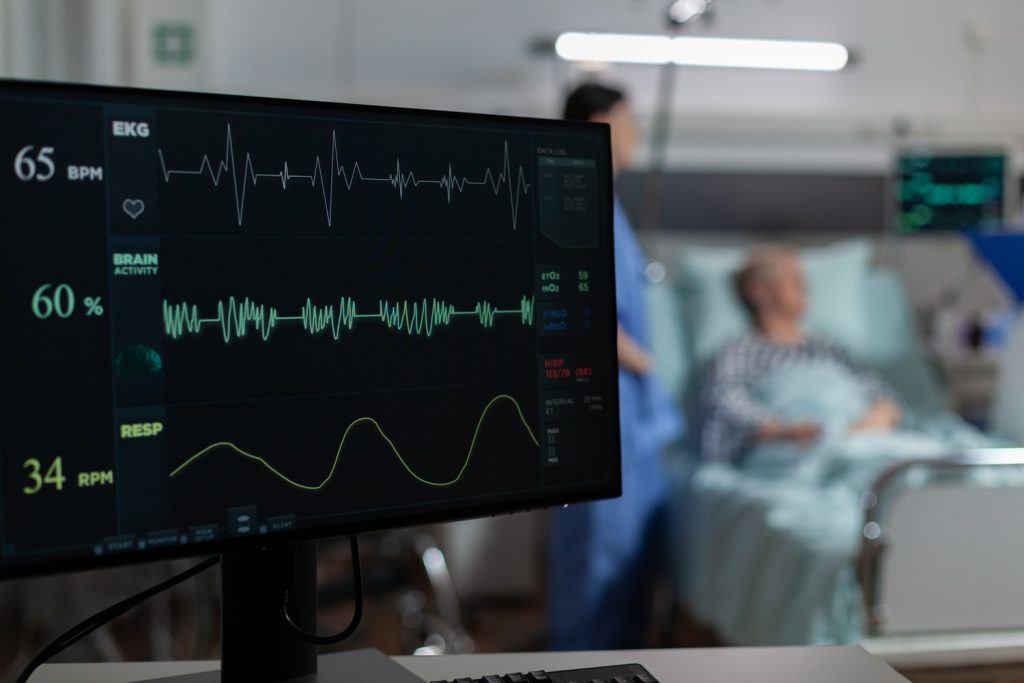
What does an echocardiogram show?
It checks structure and function in real time, how the valves open and close, and whether there are features that suggest inflammation, infection, fluid around the heart, or a tendency to form clots.
Heart pumping strength- An echo shows how well your heart muscle squeezes and relaxes with each beat. It helps your doctor understand whether the heart is pumping enough blood and whether there are signs of weakness, such as those seen in heart failure or cardiomyopathy.
Heart chamber size and wall thickness- The test reveals if the heart chambers are enlarged or if the muscle walls have become thick. These changes are often linked to long-standing high blood pressure, valve problems, or certain heart muscle conditions.
Valve structure and function- An echo gives a clear view of how the heart valves open and close. It can detect narrowing, leakage, or added strain on the heart caused by valve disease.
Blood flow direction and speed- With Doppler imaging, an echo tracks how blood moves through the heart. This helps assess whether flow is normal, whether pressure inside the heart is elevated, and whether there are concerns such as pulmonary hypertension.
Fluid around the heart and inflammation- Echo can detect pericardial effusion (fluid around the heart) and features that may suggest pericarditis.
Clots, infection, and structural concerns- In selected scenarios, echo can detect clots within the heart, infection on valves (endocarditis), and congenital structural issues that persist into adulthood.
This is why many patients find the echocardiogram test reassuring. It is a high-value test that answers many important questions without radiation or recovery time in most cases.
Can echo detect heart attack?
Patients often search “heart attack echo ” or “echo heart attack” when they have chest pain or abnormal blood tests. Here is the truth.
An echocardiogram does not diagnose a heart attack the way cardiac troponin blood tests do. Those are the primary tools in the early hours of a suspected heart attack.
But an echo can strongly support the diagnosis and help guide urgent decisions.
What an echo reveals after a heart attack
A heart attack injures the heart muscle by cutting off the oxygen supply. When that happens, the injured area may not move as it should. On echo, this can appear as a “wall motion abnormality,” meaning a part of the heart wall contracts weakly or not at all.
It can detect the effects of a heart attack, especially once damage has occurred, and it can help estimate how much the pumping function has been affected.
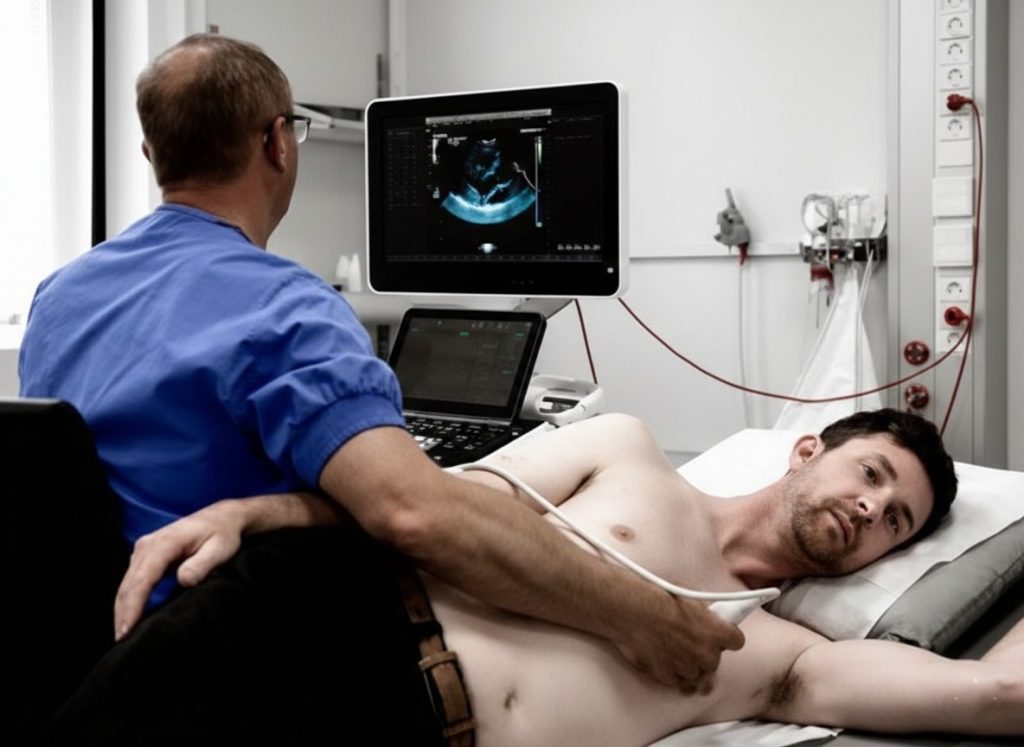
What an echo cannot do in a heart attack
Echo does not confirm the presence of an actively blocked coronary artery. It also cannot reliably date the event on its own. A wall motion abnormality may occur with a recent heart attack, an older heart attack, or sometimes severe, ongoing reduced blood flow without a completed heart attack.
That is why echo is often used alongside troponin, and the right imaging when needed.
Can the echo show heart blockage?
Not directly, in most cases.
Coronary artery blockages are usually in small blood vessels on the surface of the heart. Standard echocardiography is not designed to visualize these arteries as well as a Coronary CT angiogram or invasive angiography can.
However, an echo can reveal indirect signs of a blockage.
An echocardiogram may suggest reduced blood supply when it shows:
New or regional wall motion abnormalities
Reduced pumping function without another clear cause
Valve leakage that appears suddenly after a heart attack complication
Features of stress on the heart that match symptoms and risk profile
Echo can raise or lower suspicion, but it does not map the blockages.
When does a stress echo help
If your symptoms occur mainly with activity, a stress echo cardiogram may be recommended. This combines echo images before and after exercise (or medication that simulates exercise). A stress echo looks for changes in wall motion that occur when the heart works harder, which can suggest coronary artery disease.
This is often a practical bridge between symptoms and more advanced imaging.
What tests should be done when an echo cannot detect?
When the doctor is specifically trying to confirm or rule out coronary artery narrowing, tests may include:
Calcium scoring in selected patients
Nuclear stress testing in appropriate scenarios
Invasive coronary angiography when the risk is high, or the symptoms are concerning
Your cardiologist chooses the test based on symptoms, risk factors, ECG findings, exercise capacity, kidney function, and how urgent the situation is.
When to book an echo evaluation
Consider a cardiology review if you have:
Chest tightness or pressure, especially with exertion
Shortness of breath, reduced exercise tolerance, or swelling
Palpitations, dizziness, or fainting episodes
A murmur sound
History of high blood pressure, diabetes, high cholesterol, or a family history of heart disease
Prior heart attack, stent, or heart failure diagnosis requiring monitoring
Why trust Dr. Muhamed Shaloob for all your cardiac screenings?
Patients do best when they understand why a test is being performed, what it can answer, and what it cannot. That is a major part of Dr. Muhamed Shaloob’s approach.
Dr. Shaloob is a DHA-licensed cardiologist in Dubai with 12+ years of clinical experience and 9,000+ cardiac interventions performed.
Focuses on complete cardiac evaluation, not just performing an echo
Interprets results in a proper clinical context, especially for coronary artery disease, arrhythmias, heart failure, and valve disorders
Uses advanced GE Healthcare imaging systems for accurate diagnostics
Provides direct physician interpretation, not technician-based reporting
With advanced GE Healthcare imaging systems and direct physician interpretation, patients receive clearer answers and a plan that fits their risk profile and day-to-day life.
Advanced echo Diagnosis with Dr. Shaloob in Dubai
An echo is one of the most useful front-line heart tests available. It answers the key question by revealing how your heart muscle, valves, and blood flow are behaving in real time. It can show damage patterns that support a diagnosis of heart attack, and it can point toward reduced blood supply, but it usually cannot directly confirm coronary blockages.
An echo heart attack evaluation helps assess how much the heart’s pumping function has been affected after a suspected or confirmed heart attack.
If you want clarity on whether an echo is the right test for your symptoms, or you need a careful second opinion on results, book a consultation with Dr. Muhamed Shaloob.
FAQs About Heart Problem Symptoms
1. What does an echocardiogram show?
An echocardiogram shows the heart’s structure and function in real time. It evaluates pumping strength, chamber size, valve movement, and blood flow patterns. It can detect heart muscle weakness, valve disease, pericardial effusion, and structural abnormalities.
2. What does echo test show, and what does echo check?
It shows how well your heart muscle contracts and how blood flows through the valves and chambers.
It checks the pumping function, valve performance, chamber enlargement, and signs of heart strain or damage.
3. What is echo test, and what does echo do?
It is a heart ultrasound that creates moving images using sound waves. It helps your cardiologist assess heart structure, measure function, and identify conditions such as heart failure or valve problems.
4. Can echo detect heart attack?
It cannot confirm a heart attack on its own, but it can show wall motion abnormalities caused by heart muscle damage. An echocardiogram helps assess how much the heart’s pumping function has been affected.
5. Can echo detect heart blockage, or can an echo show heart blockage?
Not directly. It does not clearly visualize coronary artery blockages. Yes. It may reveal reduced movement of part of the heart muscle, which can suggest reduced blood supply and lead to further testing.