
Best Interventional Cardiologist in Dubai | Interventional cardiology Dubai
We are proud to offer exceptional cardiac care under the leadership of Dr. Muhamed Shaloob, who is widely regarded as the best interventional cardiologist in Dubai. If you’re looking for advanced interventional cardiology in Dubai, from angioplasty & stenting to carotid and peripheral interventions, you’re in expert hands.
Dr. Muhamed Shaloob and his team specialize in advanced, minimally invasive techniques, providing patients with cutting-edge solutions for even the most complex heart and vascular conditions.
This page will guide you through interventional cardiology, explaining how these procedures can diagnose and treat critical issues, helping you regain your heart health.
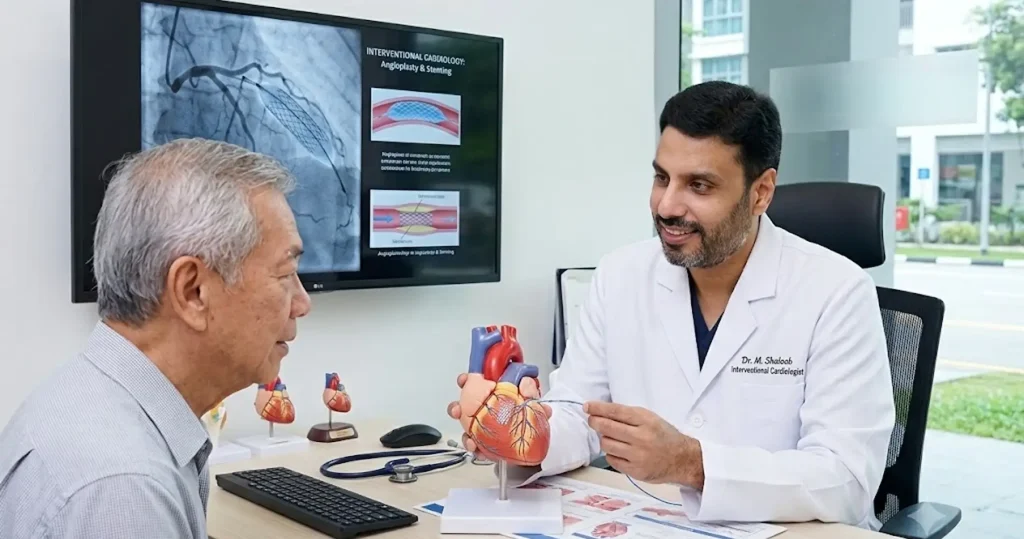
What is cardiology interventional?
A specialized field within cardiology, interventional cardiology is dedicated to diagnosing and treating cardiovascular diseases through the use of catheter-based procedures. Instead of open-heart surgery, interventional cardiologists make small incisions.
They then guide thin, flexible tubes called catheters through blood vessels to treat the heart or other affected arteries. This approach significantly reduces recovery time, pain, and the risks of more invasive surgical procedures.
What does interventional cardiology mean for patients?
Access to advanced treatments for conditions like blocked arteries, structural heart defects, and other vascular issues is often available without the need for extensive surgery.
An interventional cardiologist is a highly skilled physician who performs these procedures, offering precise and effective solutions for complex cardiac problems. If you’re searching for “interventional cardiology near me” in Dubai, Dr. Muhamed Shaloob provides comprehensive care at your doorstep.

Interventional cardiology procedures
Dr. Muhamed Shaloob specializes in a range of state-of-the-art interventional cardiology procedures, designed to restore optimal blood flow and improve heart function.
Coronary angioplasty & stenting Dubai
One of the most common and vital interventional procedures is coronary angioplasty & stenting, primarily used to treat a blocked artery in the heart, a common cause of chest pain (angina) and heart attacks.
- Understanding the problem: When fatty plaques build up in the coronary arteries (atherosclerosis), they can narrow or block these crucial vessels, restricting blood flow to the heart muscle. This can lead to a heart attack procedure if the blockage is sudden and severe.
- The angioplasty procedure: Percutaneous transluminal coronary angioplasty (PTCA), more commonly known as coronary angioplasty, is a procedure where a catheter with a tiny balloon tip is inserted into a blood vessel, typically in the wrist or groin.
- After insertion, the catheter is guided to the blocked coronary artery. The balloon on its tip is then inflated, which presses the plaque against the artery walls, widens the vessel, and restores proper blood flow.
Heart catheterization stent: In most cases, a small mesh tube called a heart catheterization stent is placed in the newly widened artery. This heart attack stent is a scaffold to keep the artery open, preventing it from narrowing again. Stents are often coated with medication to reduce the risk of re-blockage further.
- Recovery and aftercare: Patients often wonder about pain after heart stent placement. While some discomfort or bruising at the insertion site is normal, severe pain is rare.
- Heart stent surgery recovery time is typically much shorter than open-heart surgery, with most patients returning to light activities within a few days and complete recovery within a few weeks.
- Treatment after stent placement typically involves two main components: Antiplatelet medications to prevent blood clots on the stent, and lifestyle changes to manage underlying risk factors.

Peripheral & carotid angioplasty: Interventional cardiology extends beyond the heart to address blockages in other vital bodily arteries.
Carotid artery angioplasty & stenting: Proper blood flow to the brain is maintained by the carotid arteries in your neck. If these arteries become blocked, it can interrupt this crucial blood supply and cause a stroke.
- Carotid artery angioplasty is a procedure to open narrowed carotid arteries. Similar to coronary angioplasty, a balloon-tipped catheter widens the artery.
- A carotid artery stent is then typically placed to keep the artery open. This carotid artery stenting procedure is a crucial intervention for preventing strokes in high-risk patients.
- Carotid angiography procedure: A carotid angiography procedure is often performed before the angioplasty. This diagnostic test uses X-rays and a special dye to visualize the carotid arteries and identify any blockage's exact location and severity. The carotid angioplasty procedure then follows this diagnostic step.
Peripheral angioplasty: This procedure addresses blockages in arteries supplying blood to the limbs, often in the legs, which can cause pain, numbness, and even tissue damage. Peripheral angioplasty and stenting work similarly to coronary and carotid procedures to restore blood flow.
Why choose Dr. Muhamed Shaloob for interventional cardiology in Dubai?
Dr. Muhamed Shaloob’s expertise in invasive interventional cardiology procedures, combined with his compassionate approach, has made him recognized as one of the best cardiologist in Dubai, ensuring each patient receives personalized and effective care.
By consistently utilizing the most advanced techniques and technologies, he has become a leading specialist for complex cardiac interventions in the region.
Frequently Asked Questions – Interventional Cardiology in Dubai
Who is the best interventional cardiologist in Dubai?
Dr. Muhamed Shaloob is highly regarded as one of the best interventional cardiologists in Dubai. He is known for his expertise, advanced techniques, and patient-centered care.
What is cardiology interventional?
As a subspecialty of cardiology, interventional cardiology treats structural heart diseases, coronary artery disease, and peripheral vascular disease. It does this by using catheter-based procedures, which frequently eliminates the need for open-heart surgery.
What interventional cardiology means?
It means a modern approach to treating heart and vascular conditions with minimal invasion, typically involving small punctures instead of large incisions. This approach results in less pain, a faster recovery, and fewer complications for the patient.
What interventional cardiologists do?
Using catheter-based procedures, interventional cardiologists diagnose and treat a variety of heart and vascular conditions. They perform angioplasty and stenting to open blocked arteries, repair heart valves, and address other structural heart issues.