CRT therapy in Dubai (Cardiac Resynchronization Therapy)
Cardiac Device Therapy
Dr. Muhamed Shaloob is committed to providing the most advanced and effective treatments for heart conditions, including heart failure. Dr. Muhamed Shaloob, a leading interventional cardiologist in the region, and our team offer cutting-edge solutions to improve the quality of life for our patients.
Among these is Cardiac Resynchronization Therapy (CRT), a highly efficacious treatment for patients with advanced heart failure.
Many people ask, “What is CRT?” In simple terms, CRT is a specialized therapy for heart failure that involves a device, often a CRT pacemaker or a CRT defibrillator, to help the heart’s ventricles beat in a coordinated and synchronized manner.
The heart is a powerful pump, but in some cases of heart failure, the two lower chambers (the ventricles) don’t contract simultaneously. This unsynchronized beating reduces the heart’s pumping efficiency, exacerbating the symptoms of heart failure.

CRT therapy in Dubai
CRT stands for Cardiac Resynchronization Therapy. It is a therapeutic approach to treat heart failure patients with specific electrical conduction problems. This condition, often seen on an electrocardiogram (ECG), is a widened QRS complex, indicating that the ventricles are not contracting in sync.
When the ventricles contract out of sync, the heart’s pumping becomes inefficient, leading to shortness of breath, fatigue, and swelling. CRT cardiology is focused on correcting this problem.
A CRT device sends precisely timed electrical impulses to both the right and left ventricles, causing them to pump together more efficiently.
This resynchronization of the heart’s contraction can dramatically improve symptoms, increase exercise tolerance, and in many cases, reduce hospitalizations and improve survival.
How is Cardiac Resynchronization Therapy done?
The procedure for implanting a CRT device is similar to that of a standard pacemaker.
The procedure is typically done under local anesthesia and involves a small incision, usually located in the upper chest just below the collarbone.
Dr. Muhamed Shaloob and his team then guide thin, insulated wires, called leads, through a vein to the heart.
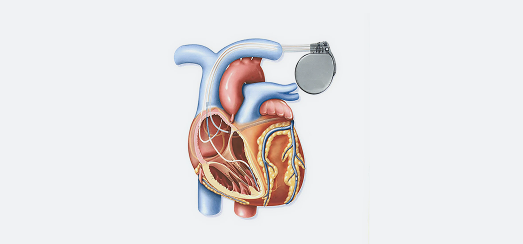
A standard pacemaker has one or two leads. A CRT pacemaker, or a CRT defibrillator (CRT-D), has three leads: One to the right atrium, one to the right ventricle, and a third lead to a vein on the surface of the left ventricle.
Once the leads are positioned, the device is connected and implanted under the skin in the chest. This procedure, called a CRT-D placement, generally takes a few hours.

Who is a candidate for CRT therapy?
Patients are considered for CRT therapy in Dubai after a thorough evaluation by a cardiology specialist. The main criteria for Cardiac Resynchronization Therapy include:
Heart failure symptoms: The patient must have moderate to severe heart failure symptoms despite taking optimal medical therapy.
Reduced ejection fraction: The heart’s pumping function, measured by ejection fraction, must be significantly reduced (typically 35% or less).
Electrical conduction Delay: An ECG must show a specific electrical delay, such as a left bundle branch block, indicating unsynchronized ventricular contraction.
If you or a loved one meets these criteria, a detailed discussion with Dr. Muhamed Shaloob and his team will help determine if CRT is the right course of action.
Types of Cardiac Resynchronization Therapy
There are two main types of Cardiac Resynchronization Therapy:
CRT Pacemaker (CRT-P): This device provides pacing therapy to resynchronize the heart’s rhythm. It is used for patients who meet the criteria for CRT but do not require a defibrillator.
CRT Defibrillator (CRT-D): Besides the pacing function, this device can deliver an electrical shock (defibrillation) to correct a dangerously fast heart rhythm. It is recommended for patients at risk of sudden cardiac arrest.
Your condition will be carefully assessed by Dr. Muhamed Shaloob and his team, who will then recommend the most suitable device.
Post-Procedure and Follow-up Care
Following CRT-D placement, patients usually remain in the hospital for a day or two so they can be monitored. Following the procedure, regular follow-up appointments are crucial to ensure the device functions correctly and adjust settings as needed. The therapy may not produce immediate results.
Patients must understand that the time it takes for cardiac resynchronization therapy to work can vary. Many patients feel an improvement in their symptoms within a few weeks to several months after the device is implanted.
Dr. Muhamed Shaloob’s commitment to our patients extends far beyond the procedure. As a trusted heart specialist in Dubai, he offers comprehensive follow-up care to ensure your device is performing correctly and that you’re benefiting fully from your CRT therapy.
FAQs
What does CRT stand for?
CRT stands for Cardiac Resynchronization Therapy, which helps the heart’s ventricles beat more synchronized.
What is CRT meaning?
Cardiac Resynchronization Therapy, or CRT, is a treatment for heart failure that involves implanting a small device, similar to a pacemaker, to help the heart’s lower chambers contract in a more coordinated manner.
What is a Cardiac Resynchronization Therapy (CRT) defibrillator?
A CRT-D is a device with a dual purpose: It can resynchronize the heart like a CRT pacemaker and also work as an implantable cardioverter-defibrillator (ICD). It can deliver an electrical shock to stop a life-threatening abnormal heart rhythm.
How is Cardiac Resynchronization Therapy done?
The procedure is performed under local anesthesia. The device goes under the skin in the upper chest, and from there, three leads are threaded through a vein and into the heart. The procedure is similar to a pacemaker implantation but requires a third lead for the left ventricle.
What are the criteria for Cardiac Resynchronization Therapy?
Generally, patients must have moderate to severe heart failure symptoms despite medication, a reduced ejection fraction (35% or less), and an electrical conduction delay (widened QRS complex) visible on an ECG.
How long does it take for Cardiac Resynchronization Therapy to work?
The time it takes for CRT to show results can vary from patient to patient. Some people may feel an improvement in their symptoms within a few weeks, while for others, it can take several months to experience the full benefits.
What rhythms are treated with cardioversion?
Cardioversion is a procedure that treats abnormal heart rhythms, including atrial fibrillation and atrial flutter, by restoring a normal rhythm. It is different from the continuous pacing provided by a CRT device.
How much is Cardiac Resynchronization Therapy?
The price of Cardiac Resynchronization Therapy can differ greatly based on the specific type of device used (either a pacemaker or a defibrillator) and the hospital where the procedure is performed.