
What Is a Normal Resting Heart Rate?
Chest discomfort during breathing can feel frightening, especially when the pain worsens as you inhale.
Many patients ask, why does my chest hurt when I take a deep breath, or describe symptoms like chest hurts when breathing in, pain in chest when taking a deep breath, or deep breath chest pain.
This type of discomfort often occurs when the lungs expand and stretch irritated tissues in the chest, causing chest pain when breathing deeply.
For patients visiting Dr Shaloob, this symptom can have several explanations, from minor muscle strain to lung-related conditions. While most causes of pain when breathing deep are not serious, persistent or severe pain should always be evaluated to rule out more significant conditions.
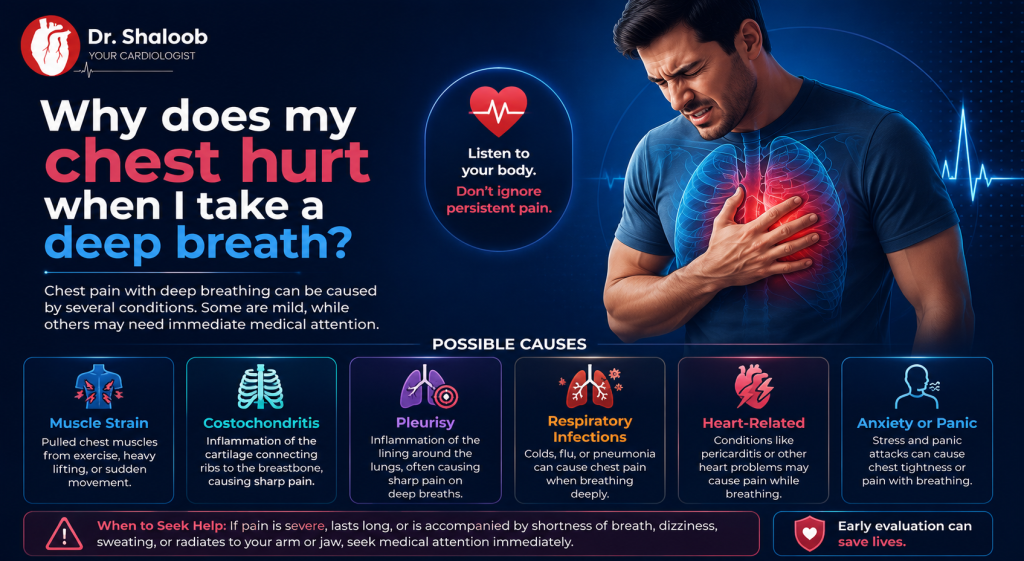
Why does chest pain when breathing?
Chest pain when breathing refers to discomfort that becomes noticeable or worse when inhaling or exhaling.
Patients often describe this as it hurts when I take a deep breath, chest pain when taking deep breath, or every time I breathe in my chest hurts. The pain may be sharp, stabbing, or feel like tightness in chest when breathing. It may also appear as upper chest pain when breathing or soreness along the ribs.
This happens because breathing involves movement of the lungs, chest muscles, ribs, and lining around the lungs. When any of these structures are inflamed or strained, chest pain with deep breath can occur.
Why does my chest hurt when I take a deep breath? Common causes
1. Muscle strain or chest wall pain
One of the most common reasons for chest pain is muscle strain. Heavy lifting, sudden movements, intense workouts, or prolonged coughing can cause chest pain that hurts to take a deep breath.
Symptoms include:
- Localized soreness
- Pain with movement
- Hurts to inhale deeply
- Pain while taking a deep breath
- Tenderness on touch
This type of pain when breathing deeply usually improves with rest.
2. Costochondritis (Inflammation of rib cartilage)
Costochondritis causes inflammation where ribs attach to the breastbone, leading to chest pain.
Symptoms:
- Sharp chest hurts when breathing in
- Pain near the breastbone
- Chest pain while inhaling
- Increased pain with movement
3. Pleurisy (Inflammation around the lungs)
Pleurisy causes irritation of the lining around the lungs. This causes pain with deep breath and chest pain.
Symptoms:
- Sharp chest pain when deep breathing
- Pain in my chest
- Dry cough
- Shortness of breath
4. Lung infections (Pneumonia or bronchitis)
Respiratory infections can cause chest pain while taking a deep breath, along with fever and cough.
Symptoms:
- Fever and chills
- Productive cough
- Chest pains when breathing
- Fatigue
Global respiratory data suggests pneumonia remains a major cause of hospital admissions, particularly in older adults.
5. Pulmonary embolism (Blood clot in the lung)
A pulmonary embolism occurs when a blood clot blocks and creates a block in one of the arteries in the lungs. This can cause sudden chest pain and breathlessness. Some patients may also feel that every time I breathe my chest hurts, especially during deep breathing or coughing. This condition requires immediate medical attention, as it can affect oxygen flow and become life-threatening if not treated promptly. Symptoms:
- Sudden severe pain
- Breathlessness
- Rapid heartbeat
- Pain in chest when deep breathing
This is a medical emergency.
6. Pneumothorax (Collapsed lung)
A pneumothorax occurs when air leaks into the space between the lung and chest wall, causing the lung to partially or completely collapse. This can lead to sudden discomfort, along with sharp pain and difficulty in breathing. The pain often affects on one side and may worsen when you move or cough, so it should be evaluated without delay.
. Symptoms:
- One-sided pain
- Shortness of breath
- Chest hurts to breathe
- Sudden chest pain when breathing deeply
7. Heart-related causes
Some patients wonder why does my heart hurt when I breathe or why does my heart hurt when I take a deep breath.
Although less common, inflammation of the lining around the heart, such as pericarditis, can lead to pain when breathing deep. This discomfort may worsen while lying down and improve when sitting forward, and it may be accompanied by chest tightness or feeling of breathlessness.
Symptoms:
- Pressure-like pain
- Chest pain when breathing deeply
- Sweating
- Nausea
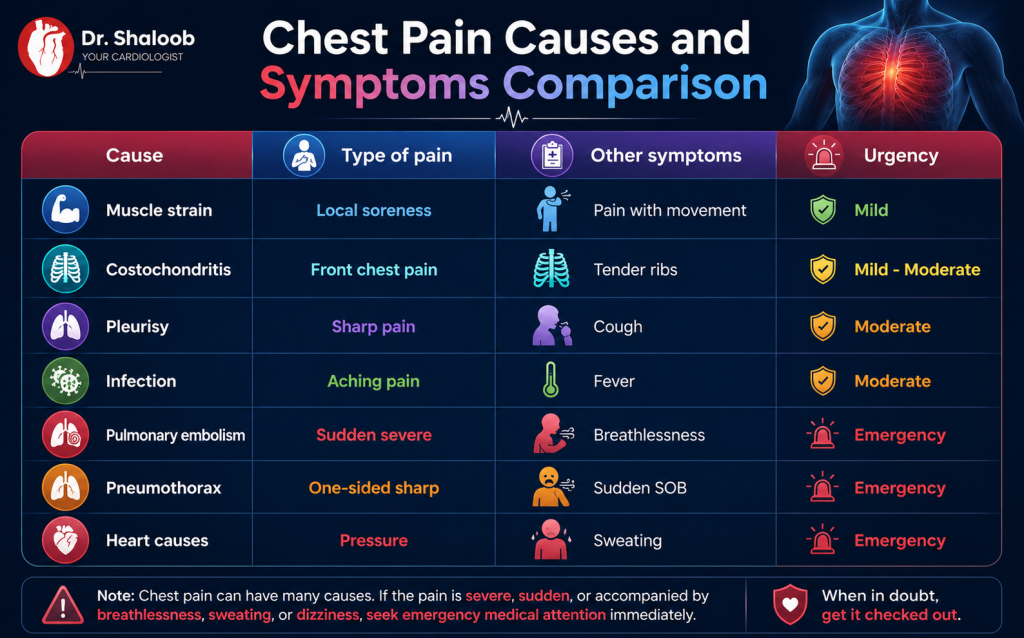
Chest pain causes and symptoms comparison
Cause | Type of pain | Other symptoms | Urgency |
Muscle strain | Local soreness | Pain with movement | Mild |
Costochondritis | Front chest pain | Tender ribs | Mild-Moderate |
Pleurisy | Sharp pain | Cough | Moderate |
Infection | Aching pain | Fever | Moderate |
Pulmonary embolism | Sudden severe | Breathlessness | Emergency |
Pneumothorax | One-sided sharp | Sudden SOB | Emergency |
Heart causes | Pressure | Sweating | Emergency |
Other possible reasons for pain when breathing deeply
Some additional causes of chest pain include:
- Anxiety-related breathing tension
- Acid reflux
- Rib fracture
- Shingles (early stage)
- Post-surgical inflammation
These conditions can lead to chest pain, which may worsen during deep inhalation or movement. Some individuals also notice that their chest hurts when they breathe out, while others experience mild soreness in chest when breathing, especially if the chest muscles or lining around the lungs are irritated.
How do doctors diagnose chest pain when breathing?
To understand the root cause of chest pain, Dr Shaloob may recommend:
- Medical history
- Physical examination
- Chest X-ray
- ECG
- Blood tests
- CT scan (if needed)
- Ultrasound
Diagnosis helps rule out serious causes of chest pain when breathing deeply.
Treatment options for chest pain when breathing
If it hurts to breathe in chest, the discomfort may be related to muscle strain, inflammation, or lung conditions. Treatment depends on the underlying cause of the chest pain and how severe the symptoms are.
Mild causes
- Rest
- Warm compress
- Anti-inflammatory medication
- Posture correction
Infection-related
- Antibiotics if bacterial
- Hydration
- Fever management
Inflammatory causes
- Pain relief
- Breathing exercises
- Anti-inflammatory treatment
Serious causes
- Blood thinners
- Oxygen therapy
- Hospital monitoring
Recovery varies depending on whether the cause is muscle strain or a lung condition.
Did You Know? |
When should you seek medical care?
Get medical help if:
- Sudden chest pain when deep breathing
- Severe pain when breathing deep
- Shortness of breath
- Fever
- Chest hurts to breathe
- Ongoing pain that lasts more than a few hours
- Dizziness or fainting
These may indicate serious causes.
Practical tips to reduce chest pain while breathing
- Avoid heavy lifting
- Maintain good posture
- Practice slow breathing
- Stay hydrated
- Treat cough early
- Avoid smoking
These simple steps can help mild chest discomfort and help your body recover more quickly.
Understanding the causes of chest pain during deep breathing
If you are wondering why does my chest hurt when I take a deep breath, the cause may range from muscle strain to lung or heart-related conditions. Most cases of chest pain when breathing deeply are mild, but persistent pain when breathing deep should not be ignored.
If you experience recurring chest pain, consult Dr Shaloob for proper evaluation and personalized care. Early diagnosis ensures safe treatment and peace of mind.
FAQs -
Why does it hurt to breathe in deep?
Pain during deep inhalation often occurs when chest muscles, ribs, or the lung lining are irritated. It may also happen with infections or inflammation affecting breathing movements.
Why does my chest hurt when I breathe in deep?
This can happen when expanding lungs stretch inflamed tissues. Common causes include muscle strain, costochondritis, or mild respiratory infections.
Why does my heart hurt when I take a deep breath?
Some people feel pain near the heart area due to inflammation around the heart lining or chest wall. However, persistent or severe pain should always be medically evaluated.
What causes chest pain when breathing deeply?
Chest pain with deep breathing may result from muscle strain, lung infections, pleurisy, or rib inflammation. The pain typically worsens when inhaling.
Why does my chest hurt when I breathe out?
Pain while exhaling may occur if chest muscles are strained or if there is irritation in the lung lining. It may also happen after coughing or heavy physical activity.
Why my chest hurt when I breathe?
Chest pain during breathing usually happens when inflamed muscles, ribs, or the lining around the lungs are stretched. Common causes include muscle strain, costochondritis, lung infections, or mild chest wall inflammation.
Why does my chest hurt when I inhale?
Inhalation expands the lungs and chest wall, which can trigger discomfort if tissues are inflamed. This type of pain is often sharp and short-lived.
Why does it hurt when I take a deep breath suddenly?
Sudden pain may occur from muscle strain, trapped air, or irritation of the lung lining. It often improves with rest, but should be evaluated if persistent.
Why does my chest hurt when I breath in?
Chest pain while breathing in often occurs when the lungs expand and stretch irritated muscles, ribs, or the lung lining. Common causes include muscle strain, inflammation, respiratory infections, or chest wall irritation.
Why does my chest hurt when I breathe deeply?
Chest pain when breathing deeply usually occurs when inflamed muscles, ribs, or the lining around the lungs are stretched during inhalation. Common causes include muscle strain, costochondritis, lung infections, or irritation of the chest wall.