
What Causes Chest Pain in a Women? Symptoms, Locations, and When to Worry
In the landscape of women’s health, chest pain remains one of the most misunderstood and potentially life-altering symptoms. For years, medical literature focused primarily on how men experience cardiac distress, leaving many women to wonder if their own symptoms—which are often more subtle—were “real” or “serious.” If you have ever asked yourself, “why does my chest hurt?” or felt a mysterious chest tightness while going about your day, you are not alone.
Chest pain is a complex, multifaceted signal from the body. It can be a sharp, stabbing needle; for others, a dull ache or an unmistakable chest discomfort that feels like an invisible weight. In this comprehensive guide, we delve into the complexities of female chest pain causes, symptoms, and diagnostic pathways. Drawing on the clinical expertise of Dr. Muhamed Shaloob, a leading cardiologist in Dubai with over 12+ years of clinical experience, this guide helps you understand your body and recognize when to seek life-saving care.
What Is Chest Pain? (Understanding the Sensation)
When we talk about chest pain, we are referring to any discomfort, pressure, or sensation felt between the neck and the upper abdomen. In clinical settings, the term chest discomfort is often used because many women do not describe their symptoms as “pain” in the traditional sense.
The Vocabulary of Discomfort
Women are statistically more likely than men to describe their symptoms using varied terminology. Understanding these nuances helps specialists like Dr. Muhamed Shaloob reach a more accurate chest pain diagnosis.
Chest Pressure: A feeling as if someone is sitting on your chest or as if a belt is being tightened around your ribcage.
Chest Heaviness: A sensation of a leaden weight within the ribcage, making it feel difficult to take a full breath.
Chest Tightness: Often described as a “squeezing” or “constricting” feeling, sometimes linked to chest tightness caused by anxiety or asthma.
Chest Pains: Sharp, fleeting “zaps” or long, lingering aches that may come and go with movement or posture.
Whether it is a pain in chest that radiates to the jaw or a localized chest pressure, identifying the type of sensation is the first step in a professional chest pain differential diagnosis.
Common Causes of Chest Pain in Women
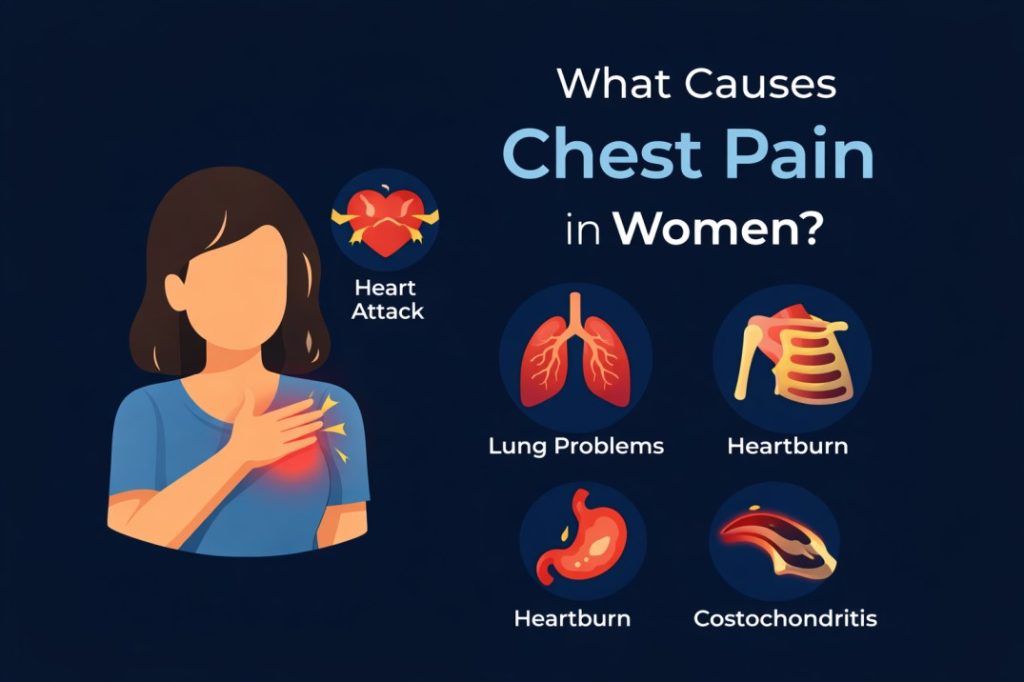
When a woman asks, “why does my chest feel tight?” the answer can range from a benign muscle strain to a life-threatening cardiac event. Female chest pain causes are often broader than those in men due to hormonal influences, anatomical differences, and different symptom presentations.
1. Heart-Related Causes
Angina: This is chest pain caused by reduced blood flow to the heart muscle. In women, this often manifests as chest tightness rather than sharp pain. Microvascular angina is particularly common in women.
Myocardial Infarction (Heart Attack): A complete blockage of blood flow. Symptoms of heart attack in women can be incredibly subtle.
Pericarditis: Inflammation of the sac surrounding the heart, often following a viral infection.
2. Lung-Related Causes
Pleurisy: Inflammation of the lining of the lungs, which causes a sharp chest pain when breathing.
Pulmonary Embolism: A blood clot in the lung—this is a critical emergency that often presents with sudden chest discomfort and shortness of breath.
3. Digestive Causes
GERD (Acid Reflux): A very common cause of pain in the middle of the chest. The burning sensation can be so intense it mimics a cardiac event.
Gallstones: Can cause referred pain that travels to the chest and right shoulder, often following a meal.
4. Musculoskeletal & Other Causes
Costochondritis: Inflammation of the cartilage connecting ribs to the breastbone. This is a frequent cause of female chest pain.
Muscle Strain: Often the reason why does my chest feel tight after a heavy workout, lifting children, or even intense coughing.
Anxiety and Panic Attacks: These can mimic a heart attack perfectly, causing rapid heart rate, sweating, and intense chest tightness.
Chest Pain Locations in Women
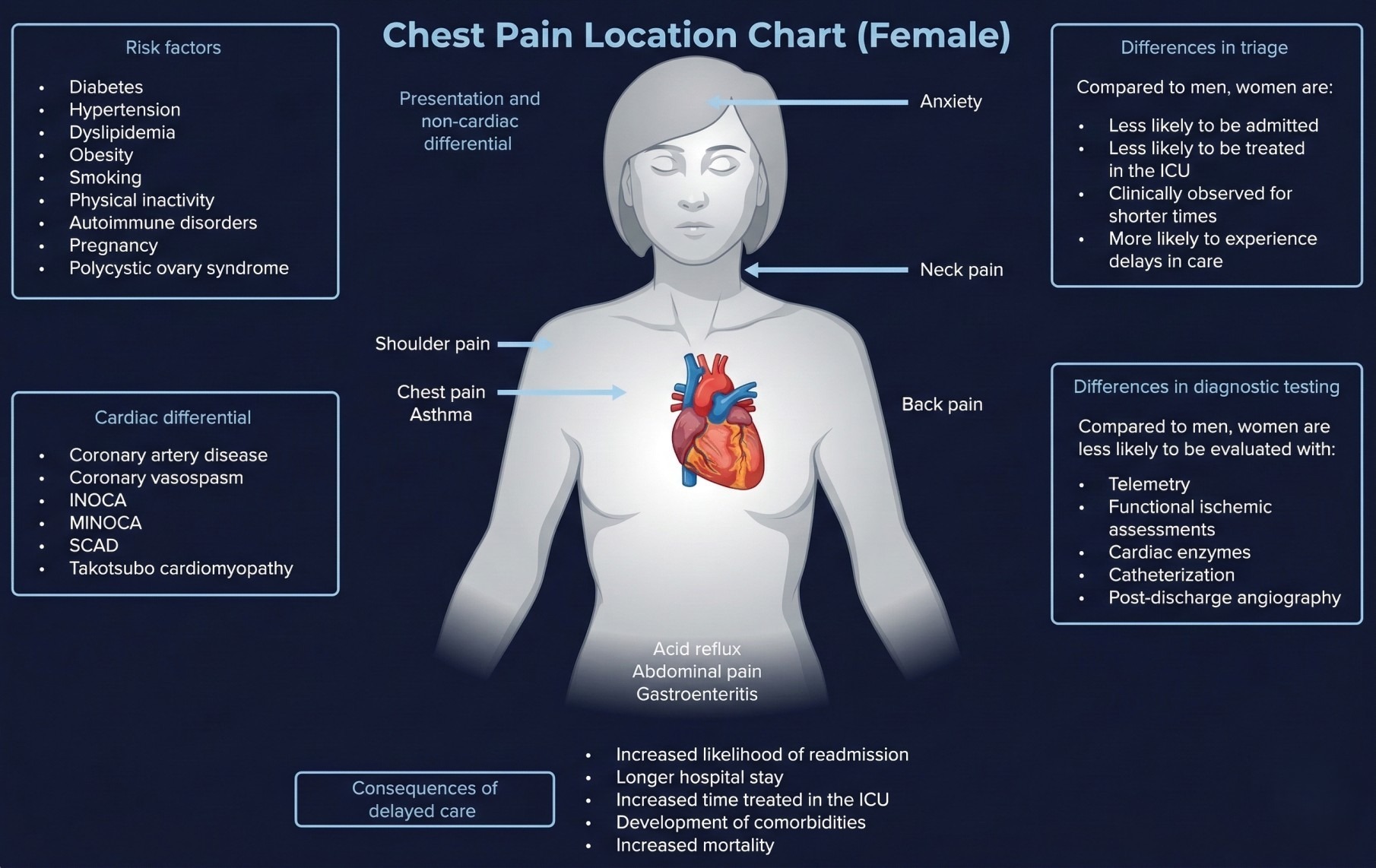
Location is a critical diagnostic clue. Doctors use a chest pain location chart to narrow down the potential source of the issue.
Female Chest Pain Location Guide
Left Chest Pain: Often associated with the heart, but can also involve the left lung, the spleen, or the stomach.
Right Side Chest Pain: Commonly linked to the gallbladder, liver, or musculoskeletal issues in the right ribcage.
Middle Chest Pain: Frequently associated with the esophagus (reflux), the trachea, or the aorta.
Upper Chest Pain: Often involves the neck, shoulders, or the top part of the lungs (apices).
Left Side Chest Pain in Women
Left side chest pain is usually the most alarming for patients because of its proximity to the heart. However, pain in left side of chest isn’t always a cardiac emergency.
Common causes of female chest pain left side include:
Stable and Unstable Angina: Pressure that may radiate to the left arm or shoulder.
Precordial Catch Syndrome: A harmless condition causing sharp, “stabbing” pains that last a few seconds, common in younger women.
Stress Cardiomyopathy (Broken Heart Syndrome): A condition often triggered by intense emotional stress, presenting as severe chest pain left side.
Right Side Chest Pain
If you experience right side chest pain, the heart is less likely to be the primary culprit, but the causes of chest pain on this side still require attention.
Common causes of pain in right side of chest:
Pneumonia: If localized in the right lung, it can cause a deep ache.
Gallbladder Disease: Often causes a sharp pain right side of chest woman may feel after a fatty meal, sometimes radiating to the back.
Liver Inflammation: Can cause a dull, heavy ache in the upper right quadrant of the torso.
Pain in the Middle of the Chest
Pain in middle of chest or pain between breasts center chest female is often “retrosternal.” This is the classic location for chest discomfort related to the digestive system or the large vessels.
If you are experiencing female pain in middle of chest, it might be:
Heartburn: A burning sensation that moves upward from the stomach.
Esophageal Spasm: These spasms can be so intense they are frequently mistaken for a heart attack.
Aortic Dissection: A rare but catastrophic tearing of the body’s main artery, often described as a “tearing” sensation in the middle of the chest.
Chest Pain When Breathing or Coughing
When a patient says their chest hurts when breathing, clinicians focus on the “pleura” (lung lining) or the structural integrity of the ribs.
Chest pain when breathing (Pleuritic Pain): Typically sharp and worsens with a deep breath, cough, or sneeze.
Chest pain when coughing: Often a sign of bronchitis or chest tightness from asthma.
Pain when breathing can also indicate a cracked rib or a strained intercostal muscle (the muscles between your ribs).
Heart Attack Symptoms in Women
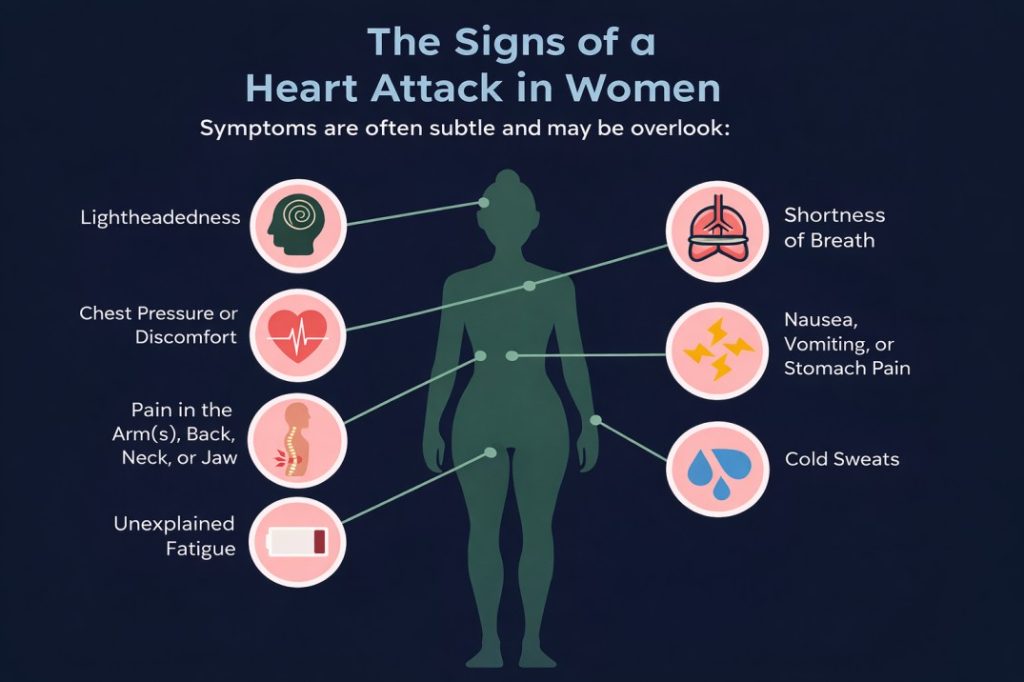
This is the most critical section for any woman to read. Female heart attack symptoms are often “atypical.” Women are less likely to experience the “Hollywood Heart Attack” (sudden, crushing pain while clutching the chest).
Signs of Heart Attack in Women:
Unusual Fatigue: Feeling completely drained for days without a clear reason.
Shortness of Breath: Having trouble catching your breath while performing light tasks.
Pain in the Jaw, Back, or Neck: Sometimes the chest doesn’t hurt at all, but the pain “travels.”
Nausea and Lightheadedness: Often mistaken for the flu, indigestion, or food poisoning.
What does a heart attack feel like? Many women describe it as an “uncomfortable pressure” or an “impending sense of doom.”
When Chest Pain Is Dangerous (When to Worry)
Knowing when to worry about chest pain female patients can be life-saving. You should never “wait and see” if you have high-risk factors like diabetes, smoking history, or high blood pressure.
When is chest pain serious? Go to the ER if:
The pain is sudden, crushing, or feels like an elephant is sitting on you.
The pain radiates to your teeth, jaw, neck, or either arm.
It is accompanied by profuse sweating (diaphoresis).
The chest tightness does not resolve with rest.
You feel dizzy, nauseated, or faint.
How Chest Pain Is Diagnosed
A chest pain diagnosis is a rigorous process. Dr. Muhamed Shaloob utilizes a chest pain differential diagnosis approach to rule out life-threatening conditions first.
Common Diagnostic Tools:
Electrocardiogram (ECG): This is the gold standard for checking the heart’s electrical rhythm.
Blood Tests (Troponin): When heart muscle is damaged, it releases proteins called troponins into the blood.
Chest X-ray: Essential for identifying lung issues like pneumonia or a collapsed lung.
Echocardiogram: An ultrasound of the heart to see its valves and pumping strength.
CT Coronary Angiography: A high-tech scan to look for blockages in the heart’s arteries.
Treatment for Chest Pain
Chest pain treatment depends entirely on the underlying cause identified during diagnosis.
Cardiac Treatment: May involve medicine for chest pain like Nitroglycerin, or procedures like angioplasty.
Digestive Treatment: Lifestyle changes, antacids, or proton pump inhibitors.
Musculoskeletal Treatment: Anti-inflammatory medications and physical therapy.
How to relieve chest pain at home: If the pain is confirmed to be muscle-related, rest and heat packs can help. However, chest pain remedies should never be used until a cardiac cause is ruled out by a professional.
Long-term Outcomes and Prevention
The long-term outcome for chest pain in women depends largely on early intervention. Many conditions, such as GERD or muscle strain, have excellent recovery rates. Even cardiac conditions, when caught early, can be managed effectively with modern medicine.
Prevention Strategies:
Regular Screening: Keep track of your blood pressure and cholesterol.
Stress Management: Practices like yoga or meditation can reduce chest tightness caused by anxiety.
Heart-Healthy Diet: Focus on Mediterranean-style eating to reduce chest pain causes related to blockages.
Listen to Your Body: Do not normalize chest discomfort. If something feels “off,” it is worth a check-up.
Final Thoughts from the Specialist
Chest pain is your body’s way of asking for attention. In women, the “silent” nature of some causes of chest pain makes it even more important to be proactive. Whether your symptoms are a result of a stressful week or a sign of an underlying cardiac condition, they deserve a professional evaluation.
By understanding the signs of heart attack and the various female chest pain causes, you are taking the most important step in your health journey: being an informed advocate for yourself. If you are in Dubai and experiencing any form of chest discomfort, scheduling a consultation with an expert like Dr. Muhamed Shaloob can provide the peace of mind—and the professional care—you deserve.
Schedule your appointment today for clear evaluation and peace of mind.
Final Thoughts from the Specialist
The information provided in this blog is for educational purposes only and does not constitute medical advice, diagnosis, or treatment. If you are currently experiencing chest pain, shortness of breath, or believe you are having a medical emergency, call your local emergency services (such as 998 in the UAE or 911 in the USA) immediately. Never disregard professional medical advice because of something you have read online.
Medically reviewed by Dr. Muhamed Shaloob, a leading cardiologist in Dubai.
FAQs About Chest Pain in a Woman
Why does my chest feel tight when I’m stressed?
Stress triggers cortisol and adrenaline, which can cause muscle tension in the chest wall and increase your heart rate, leading to chest tightness.
Can gas cause pain in the left side of the chest?
Yes, “Splenic Flexure Syndrome” occurs when gas gets trapped in the part of the colon that sits near the heart, causing referred chest discomfort.
What does it mean if my chest hurts when I cough?
It usually suggests inflammation of the pleura (lung lining) or a strain in the intercostal muscles.
How can I tell the difference between heartburn and a heart attack?
Heartburn usually stays in the center of the chest and has a burning quality. A heart attack is more likely to feel like heavy pressure and involve sweating or shortness of breath.
Is sharp pain always less serious than dull pressure?
Generally, sharp, fleeting pain is musculoskeletal, while dull, heavy pressure is more likely to be cardiac. However, only a doctor can confirm this.
Does Dr. Muhamed Shaloob treat non-cardiac chest pain?
As a cardiologist, Dr. Shaloob’s primary role is to rule out or treat heart disease. If the cause is non-cardiac, he guides patients to the correct specialist.
Can a bra that’s too tight cause chest pain?
Yes, it can lead to chest tightness and skin/nerve irritation over the ribs.
Is 20 minutes of chest pain a long time?
Yes. Any unexplained chest pain lasting more than a few minutes is a reason to seek medical evaluation.
Can hormones cause chest pain in women?
Cyclical breast pain (mastalgia) can sometimes be felt as general chest discomfort during the menstrual cycle.
What is the "Levine Sign"?
It is when a person clenches their fist over their chest to describe the heavy, squeezing sensation of a heart attack.
Can a panic attack cause jaw pain?
While rare, the intense muscle tension of a panic attack can cause jaw discomfort, making it very hard to distinguish from a heart attack.
When is chest pain serious enough for the ER?
If it is sudden, severe, or accompanied by difficulty breathing and sweating.
What medicine for chest pain is most common?
Nitroglycerin is commonly used for angina, while aspirin is often given if a heart attack is suspected.
Are chest pain remedies like ginger or garlic effective?
While healthy for the heart in the long term, they are not treatments for acute chest pain and should not replace medical care.
Can a pulled muscle feel like a heart attack?
Yes, especially if the muscle is near the sternum, but muscle pain usually changes when you move or touch the area.