
Can Kids Get Heart Attacks? Symptoms, Causes & Risks in Children & Teens
The image of a heart attack is almost universally associated with older adults, often linked to decades of lifestyle choices, chronic conditions, or the natural wear and tear of the cardiovascular system. However, a question that increasingly haunts parents, coaches, and caregivers is: Can kids get heart attacks? While the thought is deeply distressing and intuitively feels “wrong,” the medical reality is that while exceedingly rare, heart attacks in young people—including children and teenagers—can and do occur.
Understanding the distinction between adult cardiac events and pediatric heart health is vital. In adults, a heart attack is typically the result of atherosclerosis (fatty deposits in the arteries). In contrast, a heart attack in kids or a heart attack in teens is usually triggered by structural abnormalities, inflammatory conditions, or genetic factors.
Under the expert guidance of Dr. Muhamed Shaloob, a highly respected cardiologist in Dubai with over 12+ years of clinical experience, we explore the complexities of pediatric heart health to help you recognize the signs and understand the risks.
Can Children and Teenagers Get Heart Attacks?
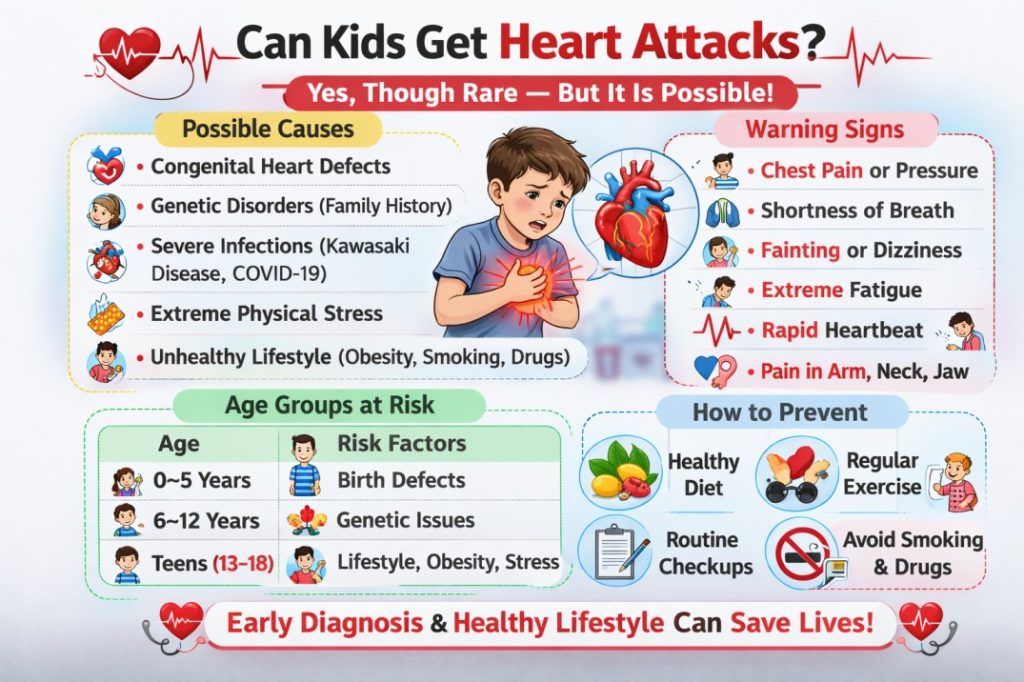
When we ask, “Can a child have a heart attack?” or “Can teenagers have heart attacks?”, the answer is a medically nuanced “Yes.” However, it is important to lead with the fact that heart attacks in teenagers and children are a statistical rarity compared to the adult population.
Heart Attack vs. Sudden Cardiac Arrest
In the pediatric and adolescent population, we often see a distinction between a classic heart attack (myocardial infarction) and cardiac arrest in teens.
Heart Attack in Teens: This occurs when blood flow to a part of the heart is blocked, damaging the heart muscle. This is often referred to as a “plumbing” issue.
Teen Cardiac Arrest: This is an electrical problem where the heart suddenly stops beating. This is more common in young athletes and is often the result of undiagnosed heart problems in teens.
Whether it is a teenage heart attack or a sudden electrical failure, the underlying causes of heart attack in young age require immediate and specialized cardiac intervention. Dr. Muhamed Shaloob emphasizes that while the incidence is low, the impact is high, making awareness the first line of defense.
What Is the Youngest Age for a Heart Attack?
Many parents search for the youngest age for heart attack or the youngest person to have a heart attack to gauge the risk for their own children. In clinical cardiology, we look at the heart attack minimum age not as a fixed number, but as a reflection of underlying pathology.
Technically, there is no absolute heart attack minimum age. Medical literature has recorded instances of heart attacks in young children and even newborns, usually due to severe congenital coronary anomalies or rare inflammatory diseases. When discussing how young can you have a heart attack, it is important to remember that the earliest age for heart attack is usually tied to a significant “structural” or “genetic” reason rather than lifestyle habits like smoking or high-fat diets.
While the average age for heart attack remains in the late 60s for men and early 70s for women, the youngest age to have a heart attack can unfortunately be at birth in extreme cases of congenital defects where the heart’s own blood supply is compromised from the first breath.
Heart Attack Symptoms in Teens and Young People
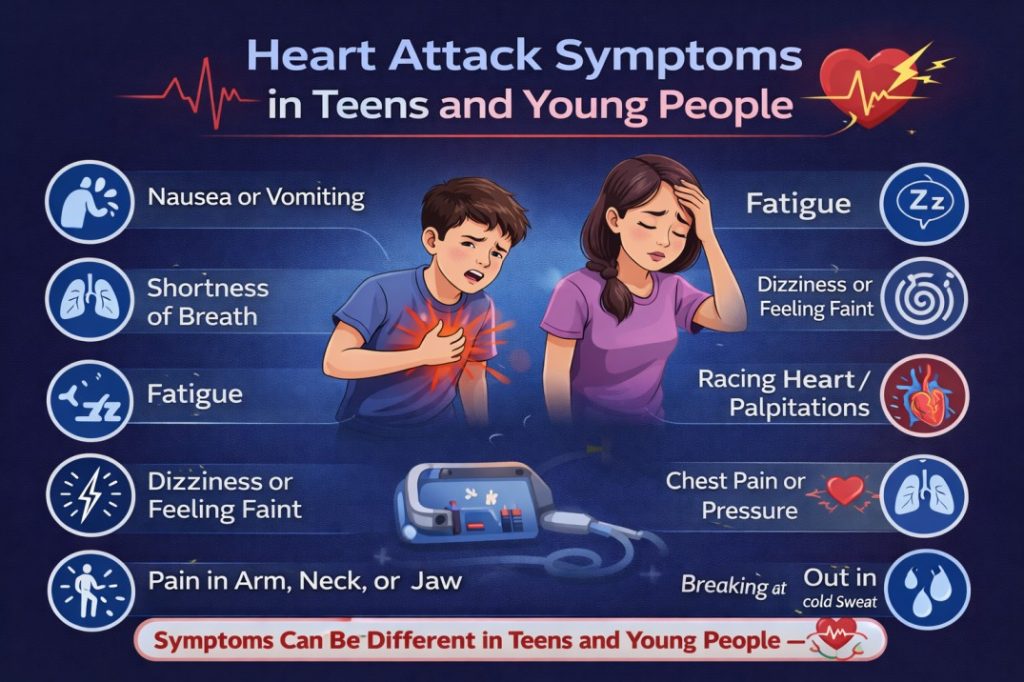
Recognizing teenage heart attack symptoms is exceptionally challenging because they often mimic more common, less serious issues like asthma, panic attacks, or musculoskeletal strain from sports. However, knowing the signs of heart attack in teens can be the difference between a recovery and a tragedy.
Common Symptoms of Heart Attack in Young People:
Chest Pain in Teens: This is the most common sign, but in kids, it may feel like “sharp stabs” or “crushing pressure” rather than the dull ache adults describe. If the pain increases with physical activity, it is a significant warning sign.
Shortness of Breath: A teen heart attack may manifest as sudden difficulty breathing that is out of proportion to the activity being performed.
Fainting in Teenagers: Known as syncope, fainting during physical exertion is a major red flag for heart problems in teens. If a child “blacks out” while running, it is never “just dehydration” until a cardiologist says so.
15 Year Old Heart Attack symptoms: Palpitations (feeling the heart skip a beat or race), dizziness, and unexplained sweating or sudden paleness.
If you are wondering what age can you have a heart attack and show symptoms, the answer is any age. If a child or teen complains of radiating pain to the jaw or arm, it must be treated with the same urgency as an adult event.
Causes of Heart Attacks in Young Age
What causes heart attacks in young people? Unlike adults who struggle with decades of cholesterol buildup, the reasons for heart attack at young age are usually categorized into specific medical groups:
1. Congenital Abnormalities (Anomalous Coronary Arteries)
Many heart attacks in young people are caused by “Congenital Coronary Artery Anomalies.” This means the child was born with an artery that is pinched, follows an unusual path, or is in the wrong place. As they grow or engage in high-intensity sports, the artery can become compressed between other structures in the heart, leading to a sudden heart attack at young age.
2. Kawasaki Disease
This is a leading reason for heart attack in young age worldwide. It is an illness that causes inflammation in the walls of some blood vessels in the body. If untreated, it can lead to coronary artery aneurysms (ballooning of the vessels). These aneurysms can cause blood clots, leading to a heart attack in young age years after the initial fever has passed.
3. Hypertrophic Cardiomyopathy (HCM)
This is a frequent cause of heart attack at young age and the leading cause of sudden death in young athletes. In HCM, the heart muscle becomes abnormally thick (hypertrophied). This thickened muscle can make it harder for the heart to pump blood and can trigger dangerous, fast heart rhythms that lead to teen cardiac arrest.
4. Viral Myocarditis
Common viral infections can occasionally cause the heart muscle to become inflamed. This is a common why heart attack happens in young age after a severe flu or viral bout. The inflammation disrupts the heart’s ability to pump and its electrical signaling, which can lead to a heart attack in youth.
Risk Factors for Heart Attack in Kids and Teens
While the odds of heart attack at 40 are significantly higher than at 14, certain risk factors increase the likelihood of a young person heart attack.
Familial Hypercholesterolemia (FH): This is a genetic condition causing extremely high cholesterol from birth. Without treatment, this can lead to advanced plaque buildup and a heart attack at 18 or even earlier.
Family History: If a close relative had a heart attack at young age (under 50), the child’s genetic risk is significantly elevated.
Substance Abuse: Unfortunately, the use of stimulants, certain performance-enhancing drugs, or even high-caffeine energy drinks is a growing reason for heart attack in young age among older teens.
Obesity and Type 2 Diabetes: As childhood obesity rates rise, we are seeing heart attacks in young adults (in their 20s) that look more like the “adult” version of the disease, caused by early-onset atherosclerosis.
Why Are Young People Having Heart Attacks?
There is a disturbing trend in modern medicine: why are young people having heart attacks more frequently than in previous decades? While the minimum age for heart attack hasn’t changed, the prevalence of heart attacks in young adults (ages 18-30) is rising at an alarming rate.
What causes heart attacks in young adults today?
Lifestyle Shifts: Increased sedentary behavior, excessive screen time, and highly processed diets rich in trans fats and sugars.
Chronic Stress: High levels of academic and social stress can lead to chronic cortisol elevation, which impacts vascular health even in the youth.
Vaping and Smoking: These habits damage the delicate endothelial lining of the arteries, making a heart attack at 23 or heart attack at 24 a grim reality.
Undiagnosed Conditions: Many heart attacks in young people occur because the underlying condition was never screened for.
Dr. Muhamed Shaloob emphasizes that the “seed” for adult heart disease is often planted in the teenage years, making early screening and a heart-healthy diet plan essential for long-term survival.
When to See a Cardiologist
If your child or teenager experiences any of the following, a consultation with a specialist like Dr. Muhamed Shaloob is not just recommended—it is essential:
Fainting or near-fainting during or immediately after exercise.
A family history of sudden cardiac death or heart attack at a young age.
Chest pain that feels like “pressure,” “squeezing,” or “heaviness.”
Heart palpitations that cause dizziness or a feeling of being unwell.
Unexplained shortness of breath that interferes with normal play or sports.
Using advanced diagnostics like Pediatric Echocardiograms, 24-hour Holter monitoring, and Pediatric ECGs, Dr. Shaloob can identify heart problems in teens before they progress to a life-threatening event.
Schedule a consultation today.
FAQ: Understanding Pediatric Heart Health
Can kids get heart attacks?
Yes, though they are rare. Most heart attacks in kids are caused by structural defects, coronary anomalies, or inflammation (like Kawasaki disease) rather than the lifestyle-based artery blockages typically seen in adults.
Can teens have heart attacks?
Yes. Heart attack in teens is often associated with undiagnosed heart muscle diseases like Hypertrophic Cardiomyopathy or anomalous coronary arteries that become compressed during high-intensity exercise.
Can a 15 year old have a heart attack?
Yes. A heart attack at 15 is possible. If a 15-year-old has chest pain, shortness of breath, or faints, they should be evaluated by a cardiologist immediately. 15 year old heart attack symptoms are often dismissed as “growing pains,” but they must be taken seriously.
Can a 16 year old have a heart attack?
Yes, a heart attack at 16 can occur, often triggered by intense physical exertion if an underlying condition is present. It is one of the reasons why pre-sports screenings are so important.
Can a 17 year old have a heart attack?
Yes. Heart attack at 17 symptoms are similar to adults, but the cause is usually related to the heart’s structure, rhythm, or a severe genetic cholesterol disorder.
Can a child have a heart attack?
While rare, a child heart attack can happen due to genetic conditions, severe infections affecting the heart muscle (myocarditis), or complications from Kawasaki disease.
How young can you have a heart attack?
There is no “safe” age. How young can someone have a heart attack depends on the presence of severe congenital defects, which can affect infants and even newborns.
What causes heart attacks in young people?
The primary causes of heart attacks in young adults and children include heart muscle inflammation (myocarditis), genetic high cholesterol, and congenital artery problems.
What are heart attack symptoms in teenagers?
The primary heart attack symptoms teenager patients experience are chest pressure, fainting during exercise, extreme fatigue, and difficulty catching their breath during normal activities.
What is the youngest age for heart attack?
The youngest heart attack cases can occur in newborns with severe coronary anomalies. However, in the general population, most “early” heart attacks occur in the late teens or early 20s.
Age-Specific FAQ Table for Young Adults and Teens
| Question | Answer |
| Can a 12 year old have a heart attack? | Yes, though extremely rare; usually due to Kawasaki disease or defects. |
| Can a 13 year old have a heart attack? | Yes, usually due to congenital coronary anomalies. |
| Can a 14 year old have a heart attack? | Yes, intense physical exertion can trigger an undiagnosed heart muscle defect. |
| Can an 18 year old have a heart attack? | Yes, heart attack at 18 is often linked to lifestyle, vaping, or genetic FH. |
| Can a 19 year old have a heart attack? | Yes, heart attack at 19 is often the result of early-onset vascular issues. |
| Can you have a heart attack at 20? | Yes, risk factors like smoking and high blood pressure begin to manifest. |
| Can a 23 year old have a heart attack? | Yes, heart attack at 23 is becoming more common in high-stress urban lifestyles. |
| Can a 24 year old have a heart attack? | Yes, often due to early-onset atherosclerosis or the use of stimulants. |
| Can a 26 year old have a heart attack? | Yes, usually the result of multiple risk factors converging at a young age. |
Detailed Statistics: How Rare is a Heart Attack in Youth?
When parents ask “how common are heart attacks” in children, the answer is reassuring but requires vigilance. According to the American Heart Association, sudden cardiac arrest in people under age 25 occurs in about 1 in every 50,000 to 100,000 people annually.
While heart attacks are rare in the pediatric population, the odds of heart attack at 40 are roughly 1 in 100 over a ten-year period. The earliest age for heart attack linked to lifestyle is traditionally thought to be 35-40, but the rising rates of heart attacks in young adults (ages 20-30) are shifting those statistics downward.
Pediatric Heart Health and Sports Screening
One of the most common times a teen cardiac arrest occurs is on the playing field. This is why Dr. Muhamed Shaloob advocates for thorough screenings before a teen joins a competitive sports team.
What is included in a teen heart screening?
Family History: Checking for any history of fainting or early death.
Physical Exam: Checking for heart murmurs or high blood pressure.
Electrocardiogram (ECG): A simple test that looks at the heart’s electrical rhythm.
Echocardiogram: If a murmur is found, this ultrasound looks at the heart’s structure.
These tests can identify the causes of heart attack in young age such as HCM or anomalous arteries, allowing for life-saving interventions or activity modification.
The Role of Lifestyle in Prevention
Even though many heart attacks in young people are structural, lifestyle plays a growing role. Teaching a child a heart-healthy diet plan early on can prevent the metabolic changes that lead to a heart attack at 24.
Whole Foods: Focus on fruits, vegetables, and lean proteins.
Avoid Vaping: The chemicals in vapes cause immediate arterial stiffness in teens.
Monitor Energy Drinks: High doses of caffeine can trigger arrhythmias in hearts with undiagnosed minor defects.
Manage Cholesterol: If there is a family history of FH, children should have their cholesterol checked as early as age 9.
A Positive Outlook: Early Detection Can Save Lives
While the idea of a pediatric heart attack is frightening, the vast majority of heart problems in teens and children are treatable when caught early. Modern medicine offers advanced surgical, catheter-based, and pharmacological interventions that allow children with heart conditions to lead active, fulfilling, and long lives.
Dr. Muhamed Shaloob’s compassionate and evidence-based approach ensures that every child and every family receives personalized care. From neonatal screenings to sports clearance for high school athletes, his commitment to early diagnosis and proactive management gives parents peace of mind and children the chance to thrive with a healthy, strong heart.
Medical Disclaimer: The information provided in this blog is for educational purposes only and does not constitute medical advice, diagnosis, or treatment. If your child is experiencing chest pain, difficulty breathing, or faints, seek emergency medical care immediately.
Medically reviewed by Dr. Muhamed Shaloob, a leading cardiologist in Dubai.