What Is the Best Medicine for High Blood Pressure? Complete List of Blood Pressure Medications

Medically Reviewed by
Dr. Muhamed Shaloob
(M.B.B.S, M.D. Internal Medicine, D.M. Cardiology)
DHA Licensed · MOH Licensed · Abu Dhabi DOH Licensed
High blood pressure, or hypertension, is often called the “silent killer” because it typically has no outward symptoms while it quietly damages your cardiovascular system. If you have recently been diagnosed, you are likely asking: What is the best blood pressure medicine? The answer is rarely a single “super pill.” Instead, the best medication for hypertension is the one that fits your specific physiology, age, ethnicity, and co-existing health conditions.
Under the clinical guidance of Dr. Muhamed Shaloob, a highly respected cardiologist in Dubai with over 12+ years of clinical experience, we have developed this definitive 2500-word 2026 guide to help you navigate the complex world of blood pressure meds.
Understanding Hypertension and Medication Goals
Before diving into the high blood pressure medication list, it is essential to understand what we are trying to achieve. Normal blood pressure is generally defined as 120/80 mmHg. When numbers consistently exceed 130/80 mmHg, medical intervention often becomes necessary.
Why Do We Use Medication?
The primary goal of medicine for high bp is to prevent organ damage. Chronic high pressure wears down the internal lining of your arteries, leading to:
Stroke: High pressure can cause vessels in the brain to burst or clog.
Heart Attack: Overworked heart muscles can fail or coronary arteries can become blocked.
Kidney Damage: The delicate filters in your kidneys are highly sensitive to pressure changes.
Vision Loss: Strain on the blood vessels in the eyes (hypertensive retinopathy).
The Major Classes of Blood Pressure Medication
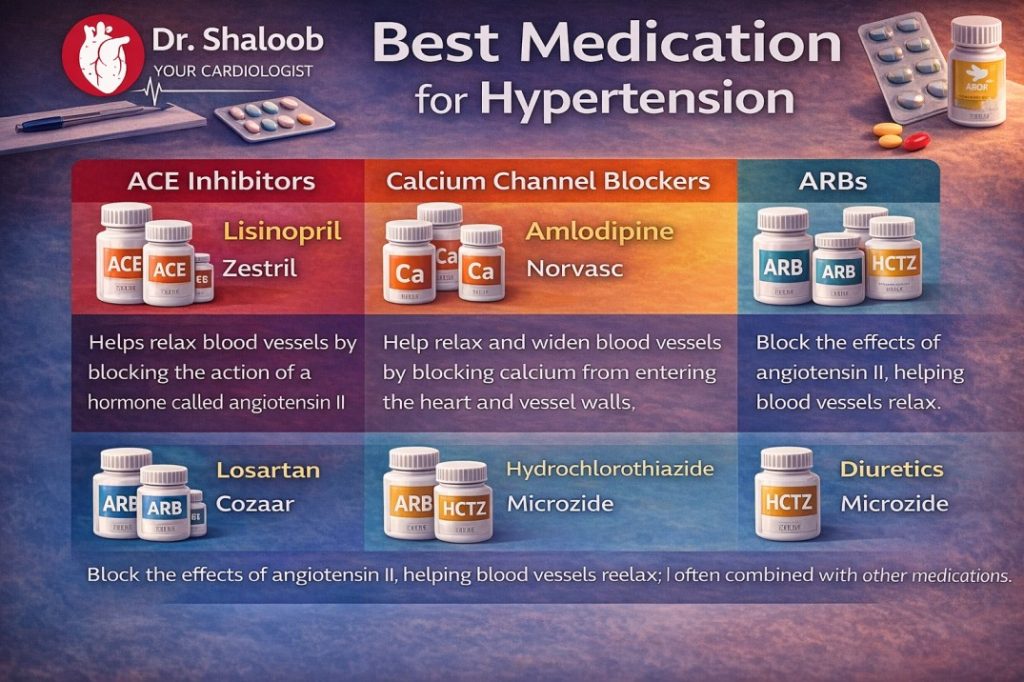
There is no single best bp medicine for everyone. Doctors categorize blood pressure medicines into several “classes” based on their mechanism of action.
1. ACE Inhibitors (Angiotensin-Converting Enzyme Inhibitors)
Common Names: Lisinopril (Zestril), Enalapril (Vasotec), Ramipril (Altace).
How they work: They prevent the body from producing Angiotensin II, a hormone that narrows blood vessels.
Best for: Often considered the best blood pressure medication for people with diabetes or chronic kidney disease because they protect the kidneys.
2. ARBs (Angiotensin II Receptor Blockers)
Common Names: Losartan (Cozaar), Valsartan (Diovan), Telmisartan (Telma).
How they work: They block the “receptors” that Angiotensin II attaches to, allowing blood vessels to stay dilated.
Best for: Patients who develop a “dry cough” while taking ACE inhibitors.
3. Calcium Channel Blockers (CCBs)
Common Names: Amlodipine (Norvasc), Diltiazem (Cardizem), Nifedipine (Procardia).
How they work: They prevent calcium from entering the muscle cells of the heart and arteries, which allows them to relax.
Best for: Often the most effective blood pressure medication for Black patients and the elderly.
4. Diuretics ("Water Pills")
Common Names: Hydrochlorothiazide (HCTZ), Chlorthalidone, Indapamide.
How they work: They help the kidneys flush excess salt and water, reducing the total volume of blood.
Best for: Used as a most common blood pressure medication to start treatment, especially in combination with other drugs.
5. Beta-Blockers
Common Names: Metoprolol (Lopressor), Atenolol (Tenormin), Bisoprolol.
How they work: They slow the heart rate and reduce the force of contraction.
Best for: Patients with a history of heart attack, arrhythmias, or heart failure.
Detailed Comparison of Medication Classes
| Medication Class | Primary Mechanism | Metabolic Impact | Notable Pros | Notable Cons |
| ACE Inhibitors | Enzyme Blockade | Kidney Protective | Low cost, proven results | Dry cough (10-20% of users) |
| ARBs | Receptor Blockade | Neutral | Very few side effects | Slightly more expensive |
| CCBs | Mineral Blockade | Neutral | Works well regardless of diet | Ankle swelling (Edema) |
| Thiazide Diuretics | Fluid Reduction | Can raise Uric Acid | Potentiates other meds | Frequent urination, Gout risk |
| Beta-Blockers | Adrenaline Blockade | Can mask low sugar | Heart rate control | Fatigue, erectile dysfunction |
What Is the Most Popular Medication for High Blood Pressure?
In 2026, Lisinopril and Amlodipine remain the most popular medication for high blood pressure globally. According to recent pharmaceutical data, Amlodipine is often the best medication for hypertension when rapid and sustained pressure reduction is needed.
However, “popular” does not always mean “best.” Dr. Muhamed Shaloob notes that many patients require combination therapy. For example, a single pill containing both an ARB and a CCB (like Telmisartan + Amlodipine) is often more effective than high doses of a single drug because it attacks the problem from two different physiological angles.
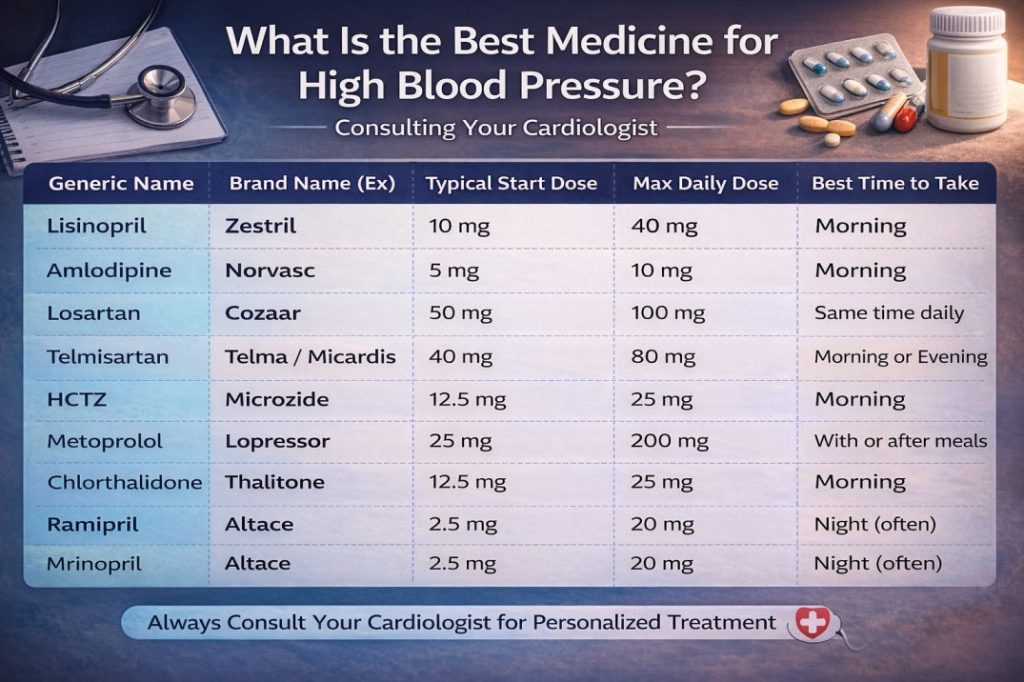
Comprehensive Dosage and Administration Chart
| Generic Name | Brand Name (Ex) | Typical Start Dose | Max Daily Dose | Best Time to Take |
| Lisinopril | Zestril | 10 mg | 40 mg | Morning |
| Amlodipine | Norvasc | 5 mg | 10 mg | Same time daily |
| Losartan | Cozaar | 50 mg | 100 mg | Morning or Evening |
| Telmisartan | Telma / Micardis | 40 mg | 80 mg | Morning |
| HCTZ | Microzide | 12.5 mg | 25 mg | Morning |
| Metoprolol | Lopressor | 25 mg | 200 mg | With or after meals |
| Chlorthalidone | Thalitone | 12.5 mg | 25 mg | Morning |
| Ramipril | Altace | 2.5 mg | 20 mg | Night (often) |
Regional Availability and Preferences (Global Perspective)
The best bp medicine may carry different names or clinical preferences depending on your location:
United Arab Emirates (UAE)
In the UAE, and specifically in Dubai, clinical practice often follows a hybrid of international guidelines (ESC and AHA). Combination therapy is highly favored here to achieve rapid control in a diverse population.
Preferred Meds: Amlodipine and Valsartan are extremely common.
Popular Brands: You will frequently see brands like Exforge (Amlodipine/Valsartan) or Concor (Bisoprolol) prescribed.
Clinical Focus: Due to the high prevalence of diabetes in the region, ACE Inhibitors and ARBs are the first-line medication for high blood pressure to ensure kidney protection.
India
In the Indian market, Telmisartan is widely considered the best medicine for high bp. It has a long half-life (approx. 24 hours), which is crucial for patients who might occasionally miss a dose. Popular brands include Telma and Telvas. Indian guidelines also frequently utilize Indapamide as a potent, metabolic-neutral diuretic.
USA / Canada
In North America, Lisinopril and Hydrochlorothiazide are staples. Recent US guidelines also strongly push for Chlorthalidone over HCTZ because it is longer-acting and more potent in preventing cardiovascular events. There is also a high utilization of Losartan due to its gout-lowering properties.
UK (NHS)
The NHS follows the “ACD” algorithm:
A: ACE inhibitor or ARB (for those under 55).
C: Calcium Channel Blocker (for those over 55 or Black African/Caribbean origin).
D: Diuretic (added as a third step).
Special Populations - Women and the Elderly
Women’s Health and Hypertension
Blood pressure medication in women requires careful navigation of the life cycle:
Pregnancy: ACE inhibitors and ARBs (like Losartan) are strictly contraindicated as they can cause fetal harm. Labetalol and Nifedipine are typically considered the safest blood pressure medication for expecting mothers.
Menopause: Hormonal shifts can make blood pressure more volatile. CCBs are often very effective during this transition as they are less affected by fluctuating hormones.
Women’s Health and Hypertension
The Elderly
For seniors, the goal is “Start Low and Go Slow.” The safest blood pressure medication for older adults avoids sudden drops in pressure that could lead to dizziness and falls. Low-dose Amlodipine is often preferred for its gentle onset, while Beta-blockers are used only if there is a specific heart condition.
Interaction Alert - Cialis (Tadalafil) and BP Meds
A common concern in cardiovascular clinics involves the interaction between hypertension medications and erectile dysfunction drugs like Cialis.
The Danger of Nitrates: If you take Nitroglycerin for chest pain, you cannot take Cialis. The combination can cause a life-threatening drop in blood pressure.
Alpha-Blockers: Meds like Doxazosin or Prazosin can interact with Cialis to cause extreme lightheadedness.
Safety with ACEs/ARBs: Generally, medicines like Lisinopril or Losartan are safe to take with Cialis, but Dr. Muhamed Shaloob recommends a gap between doses and close monitoring of your numbers to ensure you don’t experience “orthostatic hypotension” (dizziness when standing).
Interaction Alert - Cialis (Tadalafil) and BP Meds
Is there an OTC blood pressure medication? Technically, No. Hypertension is a chronic medical condition that requires a prescription. However, certain supplements can complement your blood pressure medicines:
Supplement | Potential Impact | Evidence Level | Notes |
Magnesium | 2-4 mmHg drop | Moderate | Helps relax blood vessel walls |
Omega-3 | 3-5 mmHg drop | High | Reduces inflammation and arterial stiffness |
CoQ10 | Variable | Emerging | Supports heart muscle energy |
Potassium | 5-10 mmHg drop | Very High | Helps the body excrete sodium |
Garlic Extract | 2-3 mmHg drop | Low | May have mild vasodilatory effects |
Side Effects - Identification and Management
Identifying side effects early allows you to find the best medication for hypertension without suffering through discomfort.
Dry Cough: Associated with ACE inhibitors. If it doesn’t resolve in 2 weeks, switch to an ARB.
Swollen Ankles: Common with Amlodipine. Try reducing salt intake or wearing light compression socks.
Frequent Urination: Standard with diuretics. Take the pill before 10:00 AM to avoid waking up at night.
Fatigue/Exercise Intolerance: Often seen with Beta-blockers. Discuss switching to a “vasodilating” beta-blocker like Carvedilol with your doctor.
Gout Flares: Thiazide diuretics can raise uric acid. If you have gout, ARBs are a better choice.
Treatment Pathways (The Step-Up Approach)
Most cardiologists follow a specific pathway to find the best blood pressure medicine for a patient:
Step 1: Monotherapy (One drug at a low dose).
Step 2: Dose Titration (Increasing the dose of the first drug).
Step 3: Dual Therapy (Adding a second drug from a different class).
Step 4: Triple Therapy (Adding a third drug, usually a diuretic).
Step 5: Resistant Hypertension Check (Investigating secondary causes like sleep apnea or kidney artery narrowing).
Advanced Data - Mortality and Risk Reduction
When choosing the best blood pressure medication, the goal isn’t just to lower numbers; it’s to save lives. Clinical trials (like SPRINT and ALLHAT) provide significant data on risk reduction when patients stay on their bp medication:
Stroke Reduction: Effective BP control reduces stroke risk by approximately 35–40%.
Heart Attack Reduction: Effective control reduces myocardial infarction risk by 20–25%.
Heart Failure Reduction: Effective control reduces the risk of heart failure by over 50%.
About the author

Dr. Muhamed Shaloob
Consultant Interventional Cardiologist
Advanced Cardiac Care Specialist
Preventive & Interventional Cardiology
15+ Years Experience
Heart Failure & Hypertension Management
Expert in ECG, Echo & Cardiac Screening
Dr. Muhamed Shaloob is a specialist cardiologist in Dubai with extensive experience in diagnosing and treating a wide range of heart conditions. He specializes in preventive cardiology, hypertension management, chest pain evaluation, heart failure care, and minimally invasive cardiac procedures.
He is committed to evidence-based cardiac care and focuses on early diagnosis, lifestyle-based prevention, and personalized treatment plans to help patients achieve long-term heart health.
FAQ - Frequently Asked Questions
What is the best medicine for high blood pressure with no side effects?
While every drug has potential side effects, ARBs (like Losartan) are statistically the best-tolerated blood pressure medication class with the lowest “dropout” rate in clinical studies.
Which is the best medicine for high blood pressure in India?
Telmisartan is the gold standard in India due to its long-lasting effect and protective benefits for the heart and kidneys.
What is the most popular medication for high blood pressure in 2026?
Amlodipine and Lisinopril remain the most widely prescribed worldwide due to their proven track record and affordability.
Can I take Cialis with blood pressure meds?
Yes. Angina or shortness of breath may appear during exertion and subside with rest, suggesting restricted blood flow.
What is the safest blood pressure medication for seniors?
Low-dose CCBs or Thiazide diuretics are often the safest blood pressure medication to prevent falls in the elderly, as they don’t affect the heart rate.
Can I stop taking my medicine for high bp if my numbers are 120/80?
No. Those numbers are likely the result of the medicine. Stopping abruptly can cause “rebound hypertension,” which can lead to a stroke.
Is there a natural high blood pressure medication?
The “DASH” diet (rich in fruits, veggies, and low-fat dairy) and salt restriction are the most effective natural ways to lower BP, but they usually work best alongside bp medication.
Why do I feel dizzy after taking my blood pressure medicines?
Your body may be adjusting to the lower pressure. This usually settles within 7-10 days. If it persists, your dose may be too high.
What is the most effective blood pressure medication for diabetics?
ACE inhibitors (Lisinopril) or ARBs (Valsartan) because they provide “renoprotection” (kidney protection) and don’t affect blood sugar levels.
How long does it take for blood pressure meds to work?
Some work within hours (like diuretics), but others (like ACE inhibitors or ARBs) can take 2-4 weeks to reach their full blood-pressure-lowering effect.
Conclusion: Finding Your Path to Heart Health
Finding the best blood pressure medicine is a collaborative process between you and your cardiologist. It requires consistent monitoring at home and honest communication about side effects. Whether you are prescribed a most common blood pressure medication or a specialized combination, remember that the goal is not just a lower number—it is a longer, healthier life for your heart.
If you are ready to optimize your treatment, a consultation with an expert like Dr. Muhamed Shaloob in Dubai can provide the personalized testing and expert medication management you need to thrive.
Medical Disclaimer
This article is for informational purposes only and is not a substitute for professional medical advice, diagnosis, or treatment. Always seek the advice of a qualified health provider with any questions you may have regarding a medical condition.
Medically reviewed by Dr. Muhamed Shaloob