
What Is a Dangerous Low Blood Pressure for a Woman?
In the domain of cardiovascular health, high blood pressure (hypertension) often dominates the conversation as the “silent killer.”
However, for many women, the numbers at the opposite end of the scale can be just as alarming. If you have ever felt a sudden wave of dizziness upon standing, or noticed a reading like 80/40 blood pressure on your home monitor, you’ve likely felt the pang of uncertainty: What is a dangerous low blood pressure for a woman?
Understanding what is considered low blood pressure, and more importantly, when those numbers transition from a personal baseline to a medical red flag, is essential for long-term wellness.
In this guide, we draw upon the clinical expertise of Dr. Muhamed Shaloob, a highly respected best cardiologist in Dubai with over 12+ years of clinical experience, to navigate the complexities of hypotension.
What is considered a low blood pressure?
Blood pressure is the measure of the force of your blood pushing against the walls of your arteries. A “perfect” reading is typically cited as 120/80 mmHg. But what’s considered low blood pressure?
Medically, the hypotension range is generally defined as any reading lower than 90/60 mmHg. However, it is vital to note that many healthy, athletic women maintain a low blood pressure range naturally without any adverse effects. For these individuals, a 90/60 blood pressure female reading might be perfectly normal and actually a sign of excellent cardiovascular efficiency.
The concern arises when the numbers drop significantly below your personal baseline or are accompanied by symptoms.
To help you visualize the low blood pressure range for female patients, consider this women’s low blood pressure chart:
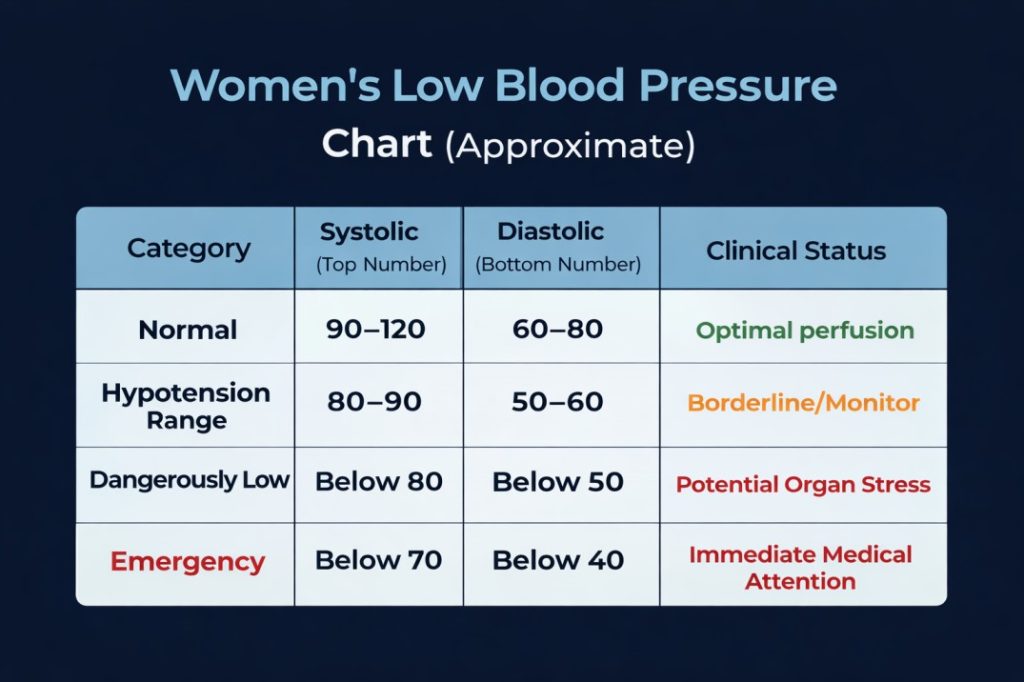
Women's Low Blood Pressure Chart (Approximate)
Category | Systolic (Top Number) | Diastolic (Bottom Number) | Clinical Status |
Normal | 90–120 | 60–80 | Optimal perfusion |
Hypotension Range | 80–90 | 50–60 | Borderline/Monitor |
Dangerously Low | Below 80 | Below 50 | Potential Organ Stress |
Emergency | Below 70 | Below 40 | Immediate Medical Attention |
When patients ask “what is consider low blood pressure” or “what number is low blood pressure,” we look at both numbers. The systolic (pressure during a heartbeat) and diastolic (pressure between beats) both matter. For instance, a low diastolic pressure 40 can be just as significant as a low systolic number because the diastolic pressure is what feeds the heart muscle itself.
What is a dangerous low blood pressure for a woman?
The question of “what is a dangerously low blood pressure for a woman” doesn’t always have a single “one-size-fits-all” answer. In his clinical practice in Dubai, Dr. Muhamed Shaloob emphasizes that blood pressure is “dangerous” when it prevents oxygen-rich blood from reaching your brain and vital organs.
While a 90/60 blood pressure female reading is often fine, a drop to 70/40 blood pressure is a different story. Generally, what is considered dangerously low blood pressure is any reading that causes fainting, confusion, or a rapid, thready pulse.
Identifying the danger zones
Is 80/40 bp dangerous? Yes, for most women, 80/40 blood pressure or blood pressure 80/40 is considered quite low and usually warrants a consultation to find the underlying cause, such as dehydration or endocrine issues.
What is a dangerously low diastolic blood pressure? Anything consistently below 50 mmHg can be concerning. A low diastolic pressure 40 often indicates that the heart isn’t getting enough rest or blood flow between beats, which can lead to myocardial ischemia (lack of blood to the heart muscle).
Critical Emergencies: Readings such as 60/40 blood pressure or even a BP 60/40 are medical emergencies. This level of dangerously low blood pressure can lead to shock, where the organs begin to fail due to lack of perfusion. If you see 60/40 blood pressure, call emergency services immediately.
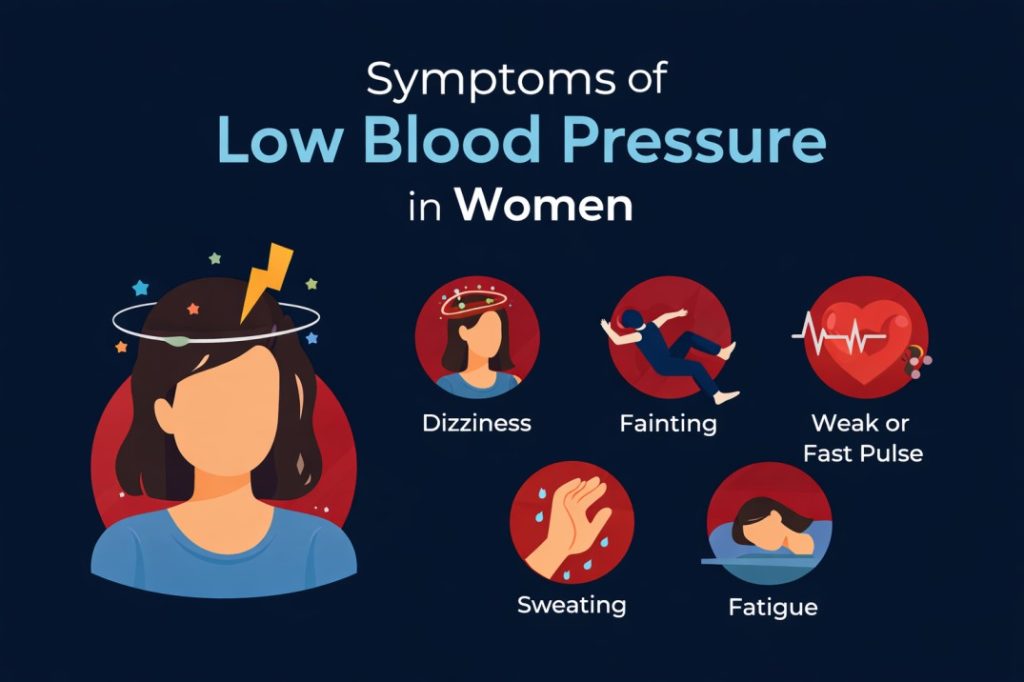
Symptoms of Low Blood Pressure in Women
Numbers on a screen are only half the story. The symptoms of low blood pressure in females provide the context needed for diagnosis. Many women experience low blood pressure for women-specific triggers, such as hormonal shifts during the menstrual cycle or pregnancy.
Common low BP symptoms in females include:
Dizziness or Lightheadedness: Especially when standing up quickly (orthostatic hypotension).
Fainting (Syncope): A sudden loss of consciousness, often the body’s way of forcing you to lie down so blood can reach the brain more easily.
Blurred or Fading Vision: The world may seem “gray” or pixelated as the optic nerve receives less blood flow.
Nausea: A persistent feeling of being unsettled or “seasick” on dry land.
Fatigue: Feeling drained and lethargic despite adequate sleep.
Cold, Clammy Skin: A sign that the body is diverting blood to the core to protect the heart and lungs.
Rapid, Shallow Breathing: The body trying to compensate for low oxygen delivery.
If you are experiencing these low blood pressure symptoms in women, it is time to track your readings and speak with a specialist. Dr. Muhamed Shaloob often advises patients to keep a “symptom diary” alongside their BP readings to identify patterns.
Specific BP readings explained (The "Is this normal?" guide)
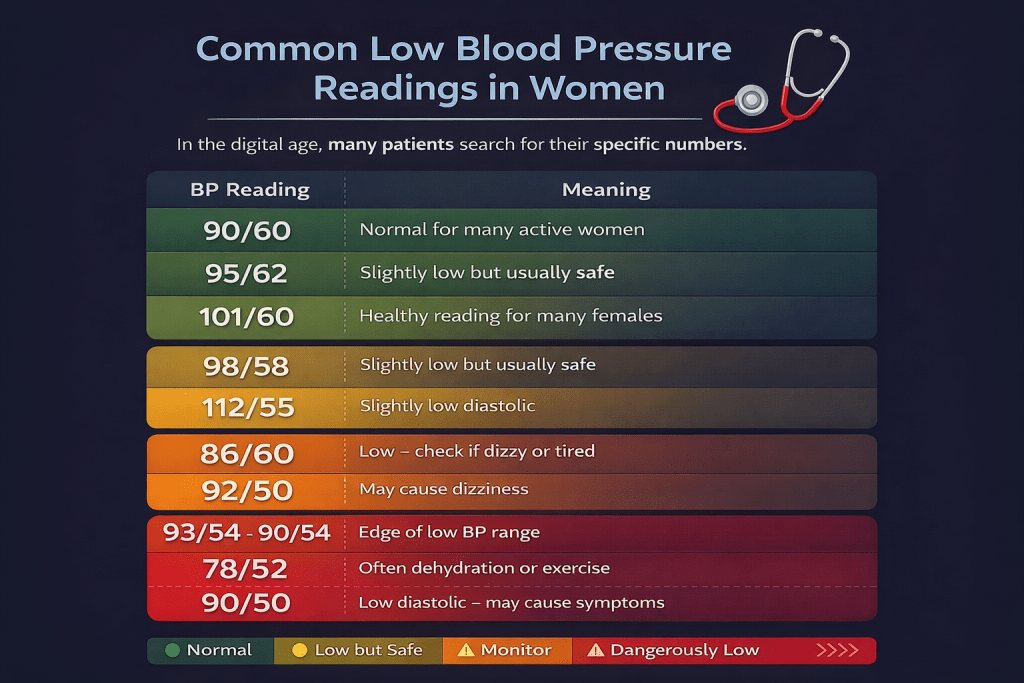
In the digital age, many patients search for their specific numbers.
Here is a comprehensive breakdown of common readings seen in cardiology clinics:
Is 90/60 Blood Pressure Female Normal? For a petite, active woman, 90/60 blood pressure female is frequently just a sign of a healthy, efficient heart. If there is no dizziness, it is usually safe.
98/58 Blood Pressure: This is slightly below the standard hypotension range but usually isn’t a cause for alarm unless you feel weak.
95/62 Blood Pressure: This is generally considered a healthy, lean reading for many women.
101/60 Blood Pressure: Perfectly normal for most young to middle-aged females.
112/55 Blood Pressure: While the systolic is great, the diastolic is slightly low. This might happen if you are very hydrated or taking certain medications.
86/60 Blood Pressure: This is on the lower side; if you feel “spacey” or tired, it’s worth a check-up to ensure you aren’t anemic.
92/50 Blood Pressure: The low diastolic (50) might cause some dizziness when moving suddenly.
93/54 & 90/54 Blood Pressure: These sit right on the edge of the low BP range for women.
78/52 Blood Pressure: This is entering a dangerous low blood pressure zone. You may feel very weak or “out of it” at this level.
80/60 Blood Pressure: Often seen in acute dehydration or after heavy exercise. If you see 80/60 blood pressure what to do, start by slowly drinking water with electrolytes and sitting down.
90/50 Blood Pressure: A low diastolic number that may cause symptoms in some women but go unnoticed in others.
Is 80/40 Blood Pressure an Emergency? If you are sweating, confused, or have chest pain with blood pressure 80/40, yes, it is an emergency.
Causes of low BP in females (The "Why")
Why does it happen? Low bp reasons in female patients can range from temporary lifestyle factors to chronic medical conditions.
Dehydration: This is the #1 reason for a low blood pressure range. Less fluid in the body means less blood volume, making it harder for the heart to maintain pressure.
Pregnancy (Maternal Hypotension): During pregnancy, the circulatory system expands rapidly to support the fetus. This often leads to maternal hypotension, especially in the first and second trimesters.
Hormonal Issues: Conditions like hypothyroidism, parathyroid disease, or adrenal insufficiency (Addison’s disease) can cause the body to lose its ability to regulate blood pressure.
Nutrient Deficiencies: A lack of Vitamin B-12, folate, or iron can lead to anemia. When you have fewer red blood cells, your blood is “thinner” and carries less oxygen, leading to symptoms of low BP in females.
Heart Conditions: Arrhythmias (irregular heartbeats), bradycardia (slow heart rate), or heart valve problems can prevent the heart from pumping enough blood to keep the pressure up.
Blood Loss: Even moderate internal bleeding (sometimes from heavy menstrual cycles) can lead to a drop in pressure.
Risks of low blood pressure
Many patients ask, “is low blood pressure dangerous?” while thinking it’s always “better” than high blood pressure.
However, the risks of low blood pressure that is sudden or symptomatic are real:
Falls and Head Injuries: The most common danger is fainting. A woman who faints from hypotension may hit her head or break a bone.
Organ Damage: If the pressure is too low for too long, the kidneys, brain, and liver don’t get enough oxygen. This can lead to permanent damage over time.
Shock: In extreme cases, like a blood pressure 60/40 event, the body may enter life-threatening shock, which requires immediate ICU-level care.
Cognitive Decline: Some studies suggest that chronic, untreated hypotension in older women may be linked to “brain fog” or cognitive issues due to poor micro-circulation.
What to expect during a consultation?
When you visit Dr. Muhamed Shaloob for a evaluation, the goal is to determine if your hypotension range is physiological (natural for you) or pathological (caused by a disease).
The diagnostic process
Medical History: A deep dive into your medications, diet, and symptoms.
Blood Tests: To check for anemia, blood sugar levels, and thyroid function.
Electrocardiogram (ECG): To check for heart rhythm issues that might be causing low bp level for female.
Echocardiogram: An ultrasound of the heart to see how well it pumps.
The Tilt Table Test: If you suffer from frequent fainting, this test monitors how your body reacts to changes in position.
Treatment and lifestyle management
For many women, treatment doesn’t involve heavy medication.
It involves lifestyle “bio-hacks”:
Salt Management: Unlike most people, you may be told to increase salt intake to help retain fluid.
Small, Frequent Meals: To prevent postprandial hypotension (blood pressure dropping after eating).
Hydration Strategy: Drinking 2-3 liters of water daily, often supplemented with electrolytes.
Slow Transitions: Learning to sit on the edge of the bed for 30 seconds before standing up.
FAQ - Your Questions Answered
What is a dangerous low blood pressure for a woman?
Generally, anything consistently below 90/60 mmHg that causes symptoms, or any acute drop below 70/40 mmHg.
What is considered low blood pressure during pregnancy?
Any drop that makes you feel faint. While maternal hypotension is common, it should always be discussed with your doctor to ensure fetal health.
Is 80/60 blood pressure what to do?
First, lie down and elevate your legs. Drink a glass of water with a pinch of salt. If symptoms persist, seek medical help.
What is a dangerously low diastolic blood pressure?
A diastolic reading below 40–50 mmHg is risky as it can reduce the oxygen supply to the heart muscle.
Can low blood pressure cause anxiety?
Actually, it’s often the other way around, but the physical symptoms of low BP (heart racing to compensate) can feel like a panic attack.
Is 90/50 blood pressure dangerous?
It can be. The diastolic of 50 is quite low and might cause significant fatigue.
What is the low bp level for female athletes?
Athletes may see 85/55 and feel great. In this case, it is not “dangerous.”
Can vitamins help with hypotension?
If your low BP is caused by B-12 or iron deficiency, supplementation can bring your levels back to normal.
Is low blood pressure dangerous in the elderly?
Yes, it is often more dangerous in older women because it significantly increases the risk of life-altering falls.
Does coffee help low blood pressure?
Caffeine can provide a temporary “spike” in BP, but it is also a diuretic, which can eventually lead to dehydration and lower BP later.
When is low blood pressure dangerous enough for the ER?
If you have cold skin, a blue tint to your lips, confusion, or a reading like 60/40 blood pressure.
Long-term outlook and prevention
The long-term outlook for women with hypotension is generally excellent, provided the cause is identified. For many, it is simply a matter of managing fluid levels and being mindful of body positions. However, for those with underlying heart or endocrine issues, the guidance of an experienced cardiologist like Dr. Muhamed Shaloob is indispensable.
Prevention tips:
Wear Compression Stockings: These help squeeze the blood back up toward your heart.
Avoid Hot Showers: Heat dilates blood vessels, which can cause your BP to plummet.
Limit Alcohol: Alcohol is dehydrating and can lower blood pressure.
Exercise Regularly: Cardio helps “tune” your autonomic nervous system to better regulate pressure.
Keep a check on your BP with appropriate diagnosis and treatment at Dr. Muhamed Shaloob’s
Your blood pressure is a dynamic “vital sign.” It changes with every breath, every meal, and every emotion. While high blood pressure gets the most attention, being aware of what is a dangerous low blood pressure for a woman empowers you to take control of your health before a fainting spell or a “gray-out” occurs.
If you find yourself frequently hitting the hypotension range or feeling held back by fatigue and dizziness, take the first step toward clarity. With over 12 years of experience, Dr. Muhamed Shaloob and his team in Dubai are dedicated to helping women find the balance their hearts need.
Medical Disclaimer:
The information provided in this blog is for educational purposes only and does not constitute medical advice, diagnosis, or treatment. Always seek the advice of your physician or other qualified health provider with any questions you may have regarding a medical condition. Never disregard professional medical advice or delay in seeking it because of something you have read on this website.
Medically reviewed by Dr. Muhamed Shaloob, a qualified cardiologist in Dubai.