
Cardiac Arrest vs Heart Attack: What’s the Difference & Which Is Worse?
Cardiac arrest vs heart attack: What’s the difference & which is worse?
When people hear the terms heart attack and cardiac arrest, they often assume they mean the same thing. In reality, cardiac arrest vs heart attack refers to two very different medical emergencies—each with distinct causes, symptoms, and outcomes.
Understanding what’s the difference between a heart attack and cardiac arrest can help you recognize warning signs early, seek timely care, and potentially save a life.
This guide explains what is a cardiac arrest vs heart attack, how they differ, which is more dangerous, and when expert cardiac care is critical.
Cardiac arrest vs heart attack: What’s the core difference?
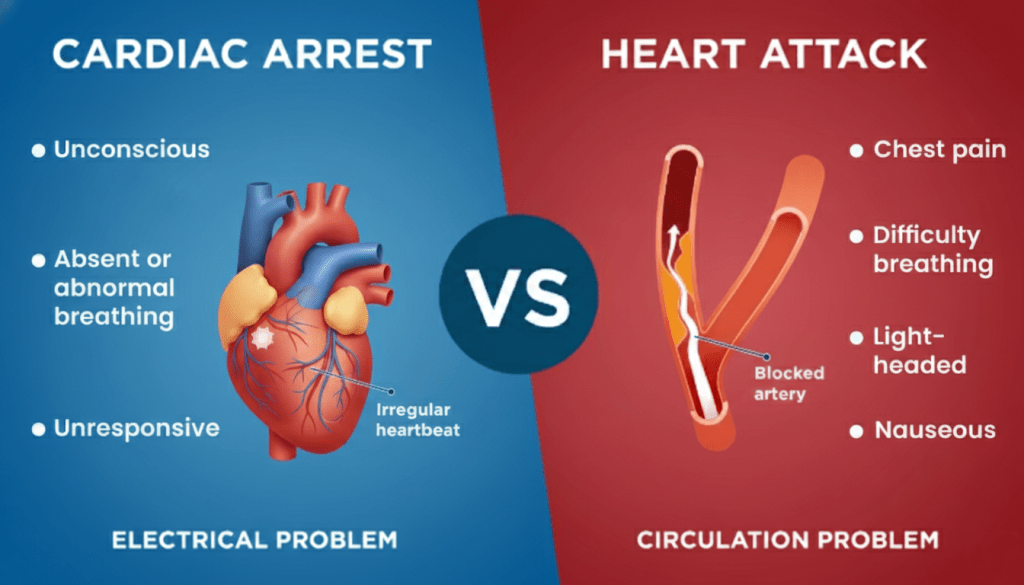
At a high level, the difference between cardiac arrest and a heart attack comes down to electrical failure vs blood flow blockage.
- A heart attack is a circulatory problem
- A cardiac arrest is an electrical problem
Although they can be related, the difference between a heart attack and a cardiac arrest is significant and medically important.
Quick comparison snapshot
- Heart attack: The heart still beats, but muscle damage occurs
- Cardiac arrest: The heart suddenly stops beating
- Urgency: Both are emergencies, but cardiac arrest is immediately life-threatening
This fundamental cardiac arrest vs heart attack difference explains why treatments and outcomes vary so widely.
What is a heart attack?
A heart attack, medically termed as myocardial infarction, occurs when blood flow to part of the heart muscle is blocked—usually by a clot in a coronary artery.
Common causes of a heart attack
- Plaque buildup in arteries (atherosclerosis)
- Blood clots
- Reduced oxygen supply to the heart muscle
Symptoms to watch for
- Chest pressure or pain
- Pain radiating from the jaw or back to the arms
- Shortness of breath
- Nausea or sweating
- Fatigue (especially in women)
In the context of what is the difference between a heart attack and cardiac arrest, a heart attack allows time for medical intervention if treated quickly.
What is cardiac arrest?
When the electrical mechanism of the heart malfunctions, the heart suddenly stops pumping blood, resulting in cardiac arrest. This is why what is a cardiac arrest vs heart attack is such a critical distinction.
Common causes of cardiac arrest
- Dangerous heart rhythm disturbances (arrhythmias)
- Ventricular fibrillation
- Severe heart failure
- An untreated heart attack
- Structural heart disease
Symptoms of cardiac arrest
- Sudden collapse
- Loss of consciousness
- No pulse or breathing
Without immediate CPR or defibrillation, cardiac arrest can be fatal within minutes. This highlights the difference between cardiac arrest vs heart attack in terms of urgency.
What’s the difference between cardiac arrest and a heart attack in symptoms?
Many people ask, what’s the difference between cardiac arrest and a heart attack when it comes to how they feel.
Feature | Heart Attack | Cardiac Arrest |
Consciousness | Usually awake | Sudden unconsciousness |
Heartbeat | Present | Stops suddenly |
Time to act | Minutes to hours | Seconds to minutes |
Understanding this difference between a heart attack and cardiac arrest helps patients and families respond appropriately in emergencies
Cardiac arrest vs heart attack: Which is worse?
A common question is: Which is worse—cardiac arrest or heart attack?
The answer depends on timing and treatment
- Cardiac arrest is immediately life-threatening and fatal without instant intervention
- Heart attacks are serious but often survivable with prompt medical care
This comparison clarifies the cardiac arrest vs heart attack differences that impact survival. A heart attack can lead to cardiac arrest, but they are not the same event.
Difference Between a Heart Attack and a Cardiac Arrest in Treatment
The difference between a heart attack and a cardiac arrest also determines how doctors treat them.
Heart attack treatment
- Medications to dissolve clots
- Angioplasty or stent placement
- Lifestyle and risk-factor management
Cardiac arrest treatment
- Immediate CPR
- Defibrillation
- Advanced cardiac life support
- Long-term rhythm management
These differences underline why recognizing what’s the difference between a heart attack and cardiac arrest is so important.
Can a heart attack cause cardiac arrest?
Yes. A severe or untreated heart attack can damage heart muscle and disrupt electrical signals, triggering cardiac arrest. This connection is why people often confuse whats the difference between a heart attack and cardiac arrest.
However:
- Not all heart attacks cause cardiac arrest
- Cardiac arrest can occur without a heart attack
This nuance is a key difference between cardiac arrest and a heart attack that patients should understand.
Risk factors shared by both conditions
While the difference between a heart attack and cardiac arrest is clear, they share common risk factors:
- High blood pressure
- Diabetes
- Smoking
- High cholesterol
- Obesity
- Family history of heart disease
Managing these risks reduces the likelihood of both events.
Why early diagnosis makes all the difference
Whether evaluating cardiac arrest vs heart attack difference or preventing future complications, early diagnosis is essential. Advanced cardiac assessments can identify:
- Blocked arteries
- Rhythm abnormalities
- Heart muscle weakness
Proactive care dramatically improves outcomes for both conditions.
Expert insight: Understanding the difference saves lives
Many emergencies escalate because patients delay care due to confusion about what is the difference between a heart attack and cardiac arrest. Education empowers faster decisions, timely treatment, and better survival rates.
Expert cardiac care with proven results in Dubai
Trust Dr. Shaloob for Advanced Cardiac Arrest vs Heart Attack Care
With over 12+ years of clinical experience and 9,000+ cardiac procedures, Dr. Muhamed Shaloob is widely recognized as Best cardiologist dubai for his expertise in diagnosing and managing complex heart conditions. Known as one of the top cardiologists in Dubai, his strengths include:
- Advanced interventional cardiology
- Heart failure and arrhythmia management
- Preventive cardiology and risk reduction
- Clear explanations and patient-centered care
Whether you’re seeking clarity on cardiac arrest vs heart attack differences or need expert cardiac treatment, you’re in experienced hands.
Take control of your heart health today — book an appointment!