
Echocardiogram vs EKG: Key Differences, Uses & Results Explained
If you’ve ever visited a cardiologist, you’ve probably heard about two common heart tests: the echocardiogram and the EKG. Many patients often ask, “Is an echocardiogram the same as an EKG?” or “How is an echocardiogram different from an EKG?” Dr. Shaloob frequently explains the key differences between these tests to help patients make informed choices about their heart health.
What is an EKG?
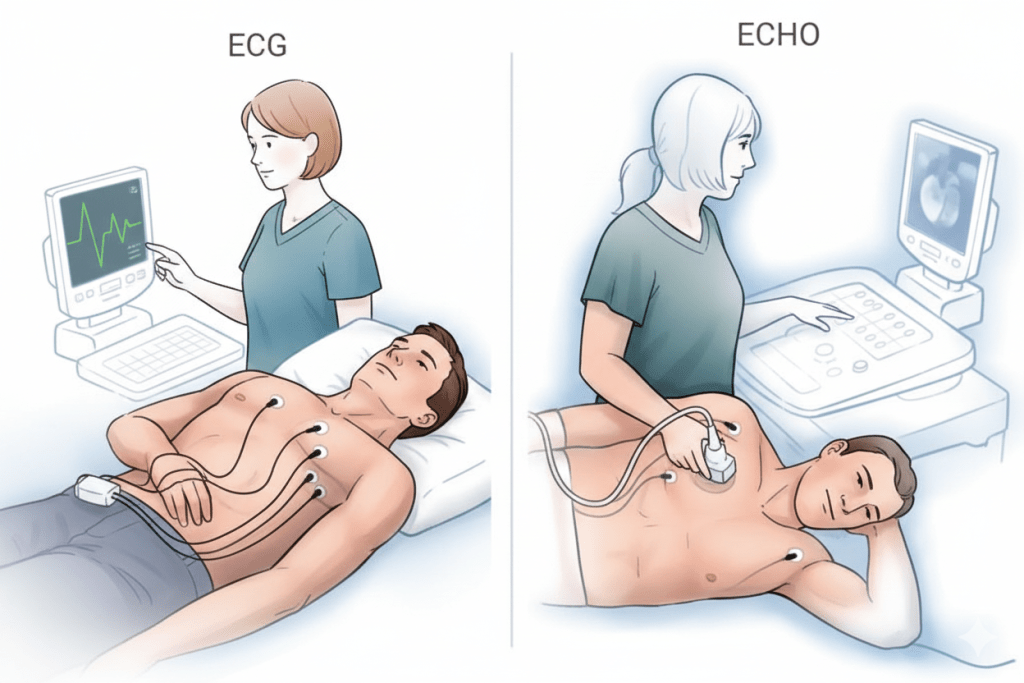
An EKG (electrocardiogram), also called ECG, is a test that records the electrical activity of your heart. Small electrodes are placed on your chest, arms, and legs to capture how your heart beats. This test provides information about your heart’s rhythm, rate, and electrical patterns.
It is used to detect:
- Arrhythmias (irregular heartbeats).
- Signs of a heart attack (current or past).
- Conduction problems in the heart’s electrical system.
- Electrical changes caused by heart disease or certain medications.
An EKG answers questions like what an EKG shows and what is an EKG test for. While it’s excellent for monitoring electrical activity, it does not show structural problems, such as valve issues or chamber enlargement.
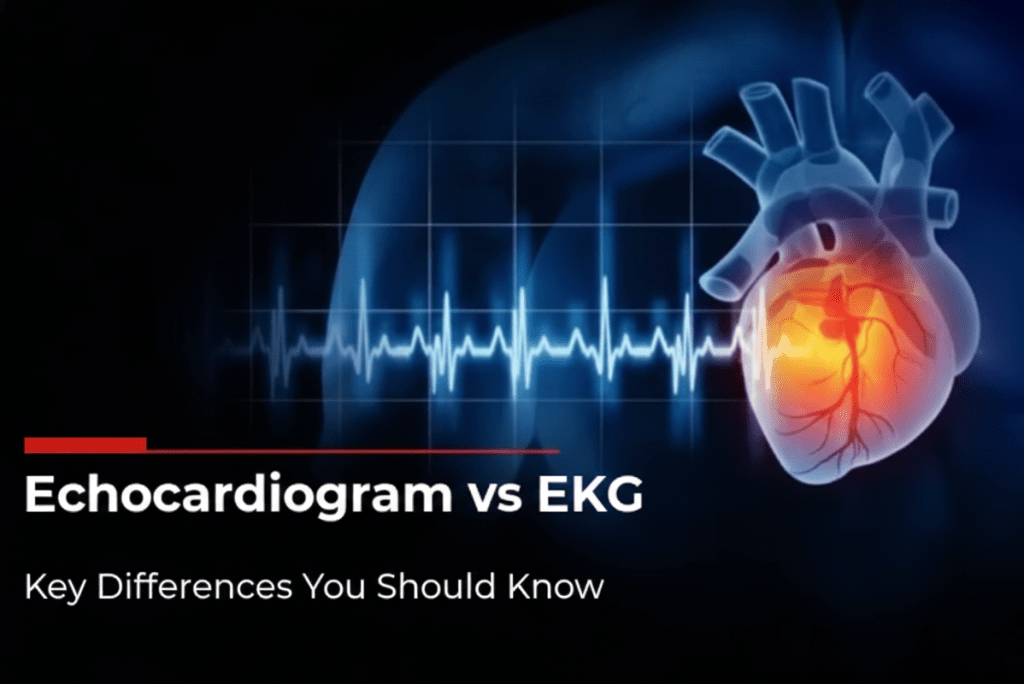
What is an Echocardiogram?
An echocardiogram (echo) is a heart ultrasound. It uses sound waves to create real-time images of the heart, letting doctors see how well it is pumping and how the chambers and valves are functioning.
It is used to spot:
- Valve problems (leaks or narrowing).
- An enlarged heart or thickened walls.
- Reduced pumping strength (ejection fraction).
- Conditions like cardiomyopathy.
- Damage from a heart attack or issues with blood flow.
An echocardiogram provides a clear view of your heart’s structure and overall health, but it doesn’t measure the heart’s electrical activity, so it doesn’t replace an EKG.
Echocardiogram vs EKG: Key Differences
Here’s an easy way to look at the differences:
- EKG/ECG: This test tracks the heart’s electrical activity. It’s great for spotting irregular heartbeats, heart attacks, or problems with the heart’s electrical system. However, it doesn’t give any information about the heart’s structure or how the valves work.
- Echocardiogram: Often called an “echo,” this is like a moving ultrasound of the heart. It shows the size and structure of the heart, how well the valves are functioning, and how effectively the heart is pumping. It doesn’t measure electrical signals, so it can’t detect rhythm issues on its own.
Many patients ask, “Echo vs EKG, which is better?” The answer depends on your symptoms:
- Irregular heartbeat or chest pain: EKG is usually the first test.
- Suspected valve disease or heart failure: Echocardiogram provides more detailed information.
In most cases, doctors use both tests together. This combination provides a comprehensive view, illustrating both the electrical functioning of your heart and its structural appearance.
Heart Ultrasound vs EKG:
- EKG: This test is great for spotting irregular heartbeats, heart attacks, and problems with the heart’s electrical system. It’s quick, painless, and often the first test your doctor will use.
- Echocardiogram: This test looks at the heart’s structure, how the chambers and valves are working, how strongly the heart is pumping, and if there’s any damage. It’s especially useful for conditions like heart failure, cardiomyopathy, or after a heart attack.
Using both tests together helps doctors catch heart problems early and create a treatment plan that’s just right for you.
Why Choose Dr. Shaloob?
Dr. Muhamed Shaloob — Best Indian cardiologist in Dubai for complex interventions and advanced heart-failure care.
Dr. Muhamed Shaloob believes it’s important for patients to understand both types of heart tests. Knowing the difference between ECG vs echocardiogram, heart ultrasound vs EKG, or EKG vs echo helps you take an active role in your heart health. When used together, these tests allow doctors to identify both electrical and structural heart problems early, ensuring a more accurate diagnosis and a treatment plan that’s tailored specifically to you.
FAQs About Heart Problem Symptoms
What are the early warning signs of heart disease?
Chest pain, shortness of breath, fatigue, palpitations, and swelling in the legs are some of the earliest symptoms.
When should I see a doctor for heart disease symptoms?
If you notice persistent chest discomfort, breathing difficulties, fainting, or unexplained fatigue, seek medical care immediately.
Can symptoms of heart disease differ between men and women?
The symptoms of heart disease in men and women can differ, with men more likely to have chest pain and women more often experiencing fatigue, nausea, or back pain. Women often report fatigue, indigestion, or back pain, while men more commonly experience chest pain.
Are there heart disease symptoms that show up only during physical activity?
Yes. Angina or shortness of breath may appear during exertion and subside with rest, suggesting restricted blood flow.
What other conditions can mimic heart disease symptoms?
Anxiety, acid reflux, lung conditions, or musculoskeletal pain can sometimes resemble heart-related symptoms.
What tests are used to confirm if symptoms are due to heart disease?
Electrocardiograms (ECG), echocardiograms, stress tests, and cardiac CT scans are commonly used diagnostic tools.
Are symptoms of heart disease always sudden or can they develop slowly?
They can develop gradually, making it important to pay attention to subtle changes in your health.
Can lifestyle changes help reduce heart disease symptoms?
Yes. Quitting smoking, eating a balanced diet along with regular exercise, and stress management can lower risk and improve heart health.
Is family history important in heart disease risk?
Absolutely. A strong family history of cardiac issues increases your chances of developing heart disease.
Can symptoms of heart disease be silent or unrecognized?
Yes. Some individuals, particularly those with diabetes, may have silent symptoms of heart disease without obvious chest pain.