
Why Do I Get Heart Palpitations After Eating and Lying Down
It is a familiar, unsettling sensation: you’ve just finished a satisfying dinner, you settle onto the sofa or into bed to relax, and suddenly, your chest begins to thud. Perhaps it feels like a fluttering feeling in chest, a pounding heart, or even a strong heartbeat that you can feel echoing in your throat.
If you find yourself asking, “Why does my heart race after eating?” or “Why does my heart beat fast after I eat and lie down?”, you are certainly not alone. This phenomenon, often referred to as postprandial tachycardia, is one of the most common reasons patients seek a consultation with a cardiologist.
In this comprehensive guide, we will explore the intricate connection between your digestive system and your heart. With clinical insights from Dr. Muhamed Shaloob, a leading cardiologist in Dubai with over 12+ years of experience, we will break down the causes, the role of the vagus nerve, and when heart palpitations after meals transition from a benign nuisance to something requiring medical attention.
What Are Heart Palpitations After Eating?
To understand postprandial tachycardia (the medical term for a fast heart rate after eating), we must first define what a palpitation actually is. A palpitation is the conscious awareness of your heartbeat. In a healthy state, your heart beats autonomously without you noticing. When that rhythm becomes noticeable, it is a palpitation.
The Vocabulary of Palpitations
Patients describe palpitations after eating in various ways:
Heart thumping or heart beating hard while resting.
Chest flutters or heart flutters after eating.
Heart skipping beats after eating (often described as PVCs after eating).
Heartbeat in throat or a feel heartbeat in throat sensation.
Heart pounding after eating, where the pulse feels visible in the chest or neck.
While it is alarming, heart palpitations while eating or immediately following a meal do not always signify a heart attack. Often, it is a sign that your body is working overtime to process what you just consumed.
The Science—Why Does Heart Rate Increase After Eating?
It is medically normal for your heart rate to fluctuate throughout the day. But does eating increase heart rate? Yes, it does. In fact, a heart rate increase after eating is a physiological necessity for survival.
The Digestive “Siphon”
When you eat, your body redirects blood flow toward the stomach and intestines to facilitate digestion. This is known as splanchnic blood flow. To maintain blood pressure in the brain and other vital organs while so much blood is diverted to the gut, the heart must beat faster and more forcefully.
High heart rate after eating is often the result of this massive internal redistribution of blood.
An elevated heart rate after eating is particularly noticeable after a heart palpitations after big meal event, where the volume of food requires maximum digestive effort.
Postprandial Tachycardia Statistics
Research suggests that a healthy individual’s heart rate can increase by 10 to 20 beats per minute (BPM) after a meal. For those with sensitive nervous systems or underlying conditions, a heart rate spike after eating can be even more pronounced, sometimes reaching over 100 BPM (tachycardia) while simply sitting at the table.
Why Does Heart Palpitations Happen When Lying Down?
Many patients find that their heart palpitations after dinner only become truly bothersome once they go to bed. Heart palpitations when lying down occur due to a combination of anatomy, physics, and the “Roemheld Syndrome.”
Pressure on the Diaphragm: When you lie down after a meal, the physical mass of the food and the resulting stomach gas push the diaphragm upward. Since the heart sits directly above the diaphragm, this pressure can physically displace or irritate the heart, leading to heart palpitations after eating and lying down.
Positional Awareness: When you are at rest, you are more likely to notice your pulse. There is less ambient noise and activity to distract you from a strong heartbeat.
Acid Reflux: Lying flat allows stomach acid to travel more easily into the esophagus, triggering acid reflux heart palpitations.
The Vagus Nerve Connection
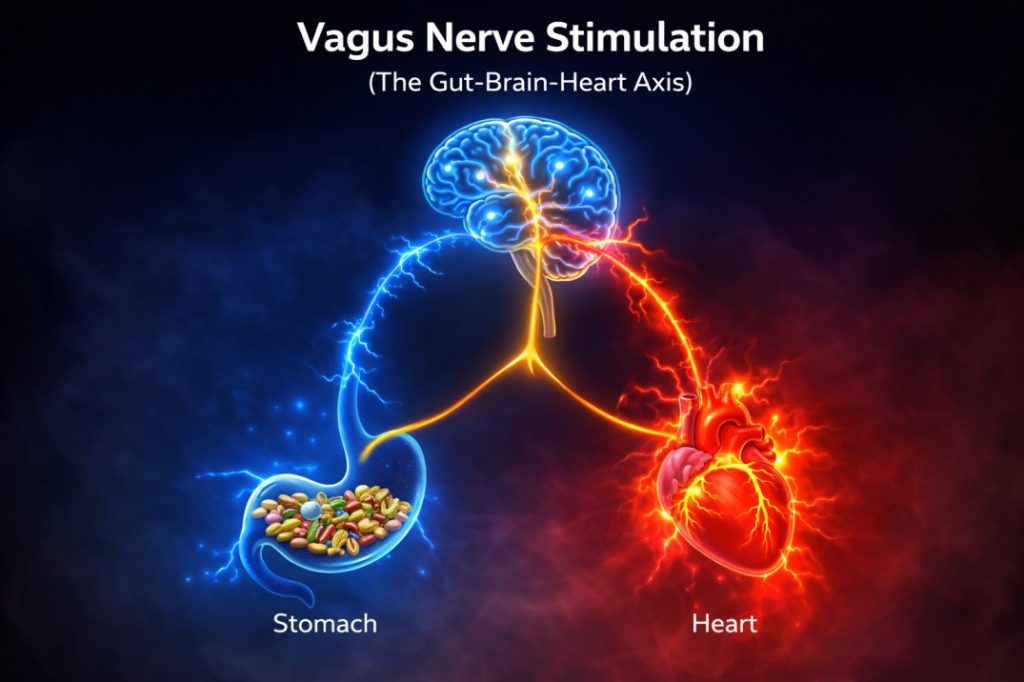
If you experience an irregular heartbeat after eating, the “Vagus Nerve” is likely the primary messenger involved. This is the longest nerve in your body, acting as a two-way superhighway between your brain and your gut.
Vagus Nerve Tachycardia After Eating
The vagus nerve is responsible for the “rest and digest” system. However, if the nerve is overstimulated—either by a very large meal, stomach gas, or bloating—it can send confused signals to the heart’s pacemaker.
Can digestion cause heart palpitations? Yes, via the vagus nerve.
Can overeating cause heart palpitations? Absolutely. A distended stomach can trigger the “Roemheld Syndrome,” where gastric pressure causes vagus nerve tachycardia after eating. This can even cause heart flutters after eating that mimic serious heart conditions.

Food Triggers—Sugar, Carbs, and Caffeine
What you eat is just as important as how much you eat. Heart palpitations after eating sugar and heart palpitations after eating carbs are two of the most reported triggers in cardiology clinics.
Insulin Spikes: Consuming high amounts of sugar or refined carbs causes a rapid rise in blood glucose. Your body releases insulin to manage this, which can simultaneously trigger the sympathetic nervous system, leading to a fast heart rate after eating.
Tyramine: Found in aged cheeses, cured meats, and red wine, tyramine can cause a pulse increase after eating in sensitive individuals.
Sodium: A high-salt dinner causes the body to retain fluid, increasing blood volume and causing the heart to beat fast after eating to move that extra fluid.
Caffeine and Alcohol: Both are known stimulants (or irritants) that can lead to palpitations after eating by increasing the heart’s electrical sensitivity.
The Stomach-Heart Connection (GERD and Gas)
Often, what feels like a heart problem is actually a gastrointestinal issue. This is known as the “Gastrocardiac Syndrome.”
GERD and Acid Reflux
Can GERD cause heart palpitations? Yes. When acid irritates the lining of the esophagus, it sits very close to the heart. The resulting inflammation can trigger gerd heart palpitations or heartburn and palpitations. Many women, in particular, find that acid reflux heart palpitations are their primary symptom of indigestion.
Gas and Bloating
Can gas cause heart palpitations? It may sound unlikely, but gas causing heart palpitations is a recognized medical phenomenon. Stomach gas heart palpitations occur when trapped air in the stomach or the “splenic flexure” (a bend in the colon) pushes upward, irritating the bottom of the heart or the vagus nerve.
Condition | Symptom | Mechanism |
GERD / Acid Reflux | Burning + Palpitations | Esophageal inflammation irritating heart nerves |
Bloating / Gas | Heart thumping + Fullness | Upward pressure on the diaphragm and heart |
Indigestion | Heart feels weird | Vagus nerve overstimulation |
Overeating | Heart rate goes up | Excessive blood diversion to the gut |
When to Worry About Heart Palpitations
Most cases of palpitations after eating and lying down are benign, but can heart palpitations be serious? Yes. Knowing when to worry about heart palpitations can be lifesaving.
Are Heart Palpitations Dangerous?
They are generally not dangerous if they are fleeting and occur only after specific triggers (like a heavy meal or a double espresso). However, you should seek a cardiac evaluation with Dr. Muhamed Shaloob if you experience:
Fainting or near-fainting (Syncope).
Chest pain or pressure accompanying the pounding heart.
Severe shortness of breath that doesn’t resolve when you sit up.
Heart palpitations that last for more than a few minutes or do not resolve with deep breathing.
Is Irregular Heartbeat Dangerous?
An irregular heartbeat after eating could potentially be Atrial Fibrillation (AFib), which increases the risk of stroke. If your heart feels like a “fish flopping in a bag” or an erratic drum solo rather than a steady thumping, it is time for an EKG. When should I worry about heart palpitations? When the rhythm becomes unpredictable and remains that way for an extended period.
How to Manage and Prevent Postprandial Palpitations
If you frequently suffer from heart palpitations after meals, these lifestyle adjustments can offer significant relief and prevent a heart rate increase after eating:
Eat Smaller, Frequent Meals: Avoid the “holiday feast” effect to prevent heart palpitations after big meal.
Stay Upright: Do not lie down for at least 2–3 hours after eating to minimize acid reflux heart palpitations.
Identify Food Triggers: Keep a diary to see if heart palpitations after eating sugar or carbs are your specific triggers.
Manage Gas and Bloating: Use anti-gas medications if gas causing heart palpitations is a recurring issue for you.
Proper Hydration: Dehydration makes the blood thicker, forcing the heart to work harder. Ensure you are drinking enough water throughout the day, but avoid large amounts of water during a meal as it can cause bloating.
Magnesium Intake: Magnesium helps regulate heart rhythm. Consult your doctor about magnesium-rich foods or supplements.
Diagnostic Steps with Dr. Muhamed Shaloob
If your heart fluttering after eating persists, a cardiologist will use several tools to rule out serious disease and ensure your irregular heartbeat after eating isn’t dangerous:
EKG (Electrocardiogram): To check the heart’s electrical rhythm in real-time.
Holter Monitor: A wearable device that records your heart for 24–48 hours, allowing the doctor to see what happens specifically after dinner or while you are lying down.
Echocardiogram: An ultrasound to ensure the heart’s structure and valves are functioning correctly.
Blood Tests: To check for anemia, thyroid issues, or electrolyte imbalances (like low potassium or magnesium) that can cause heart palpitations at rest.
Conclusion: Listen to Your Heart (and Your Gut)
The connection between the stomach and the heart is powerful. While heart palpitations after eating and lying down are often a simple case of “digestive traffic,” they serve as a reminder to be mindful of our eating habits. By choosing smaller meals, identifying your triggers like sugar and carbs, and managing conditions like GERD, you can quiet the pounding heart and enjoy your rest.
However, if you are ever in doubt—or if the fluttering feeling in your chest is accompanied by pain—trust your instincts. Dr. Muhamed Shaloob and his team in Dubai are dedicated to helping you distinguish between a “full stomach” and a “heart concern.” With precise diagnostics and a patient-first approach, we help you get back to a life of calm, steady heartbeats.
Medical Disclaimer: This blog is for educational purposes only and does not replace professional medical advice. If you are experiencing a medical emergency, please call your local emergency services immediately.
Medically reviewed by Dr. Muhamed Shaloob, a qualified medical specialist.
— Heart Palpitations After Eating
Why does my heart race after eating?
It is usually due to the heart pumping extra blood to the digestive tract (splanchnic blood flow) or the vagus nerve reacting to stomach distension.
Is heart palpitations normal after a large meal?
Yes, a slight heart rate goes up after eating is normal, but a racing heart (tachycardia) that makes you feel dizzy is not.
Can acid reflux cause heart palpitations?
Yes. The esophagus and heart share the same nerve pathways, meaning irritation in one can be felt in the other. This is a common cause of gerd heart palpitations.
What does a "fluttering feeling in chest" after eating mean?
This is often a PVC (Premature Ventricular Contraction). They are usually harmless and can be triggered by caffeine, stress, or a full stomach pressing on the heart.
How do I stop heart palpitations while eating?
Slow down your eating pace, chew thoroughly, and avoid drinking carbonated beverages that cause sudden bloating and heart palpitations.
When should I worry about heart palpitations?
If they are accompanied by dizziness, chest pain, or if the heart rate spike after eating is consistently over 100 BPM at rest.
Can heart palpitations after eating be serious?
They can be if they are a sign of an underlying arrhythmia like AFib or supraventricular tachycardia (SVT).
Why does my heart beat fast after I eat and lie down specifically?
This is likely due to the “Roemheld Syndrome,” where the stomach pushes against the diaphragm and irritates the heart’s position.
Does heart rate increase after eating for everyone?
Yes, everyone’s heart rate increases slightly, but some people are more “sensitive” to the sensation (interoceptive awareness).
Can overeating cause heart palpitations every time?
If you have a sensitive vagus nerve or GERD, overeating will almost always trigger some degree of heart thumping.