
Heart Problem Symptoms: 10 Early Warning Symptoms of Heart Disease
Causes of coronary artery disease
Heart disease is one of the leading causes of illness and death worldwide, often progressing silently until serious complications occur.
Identifying the symptoms of heart disease early can create a significant difference in timely diagnosis and effective treatment.
By exploring this blog, you will learn to recognize the early warning symptoms of heart disease and understand how different heart conditions present. You will also know the risk factors and treatment options available according to the symptoms of heart disease.
You’ll also discover how lifestyle changes and timely care can help in identifying the most important early warning signs of heart problems.
What Is Heart Disease?
Heart disease is not a single condition but a broad term describing a range of disorders that affect the heart and blood vessels. These include:
- Diseases related to blood vessels, like coronary artery disease (CAD).
- Irregular heartbeats, known as arrhythmias.
- Congenital heart defects, present at birth.
- Diseases of the heart muscle, such as cardiomyopathy.
- Heart valve disease, where valves do not function properly.
When your heart is not working efficiently, it struggles to deliver oxygen-infused blood to the rest of the body.
This affects the overall health and leads to complications like heart attack, stroke, or heart failure.
Some forms of heart disease can be prevented or managed through lifestyle changes, medications, or medical procedures.
10 Early Warning Symptoms of Heart Disease
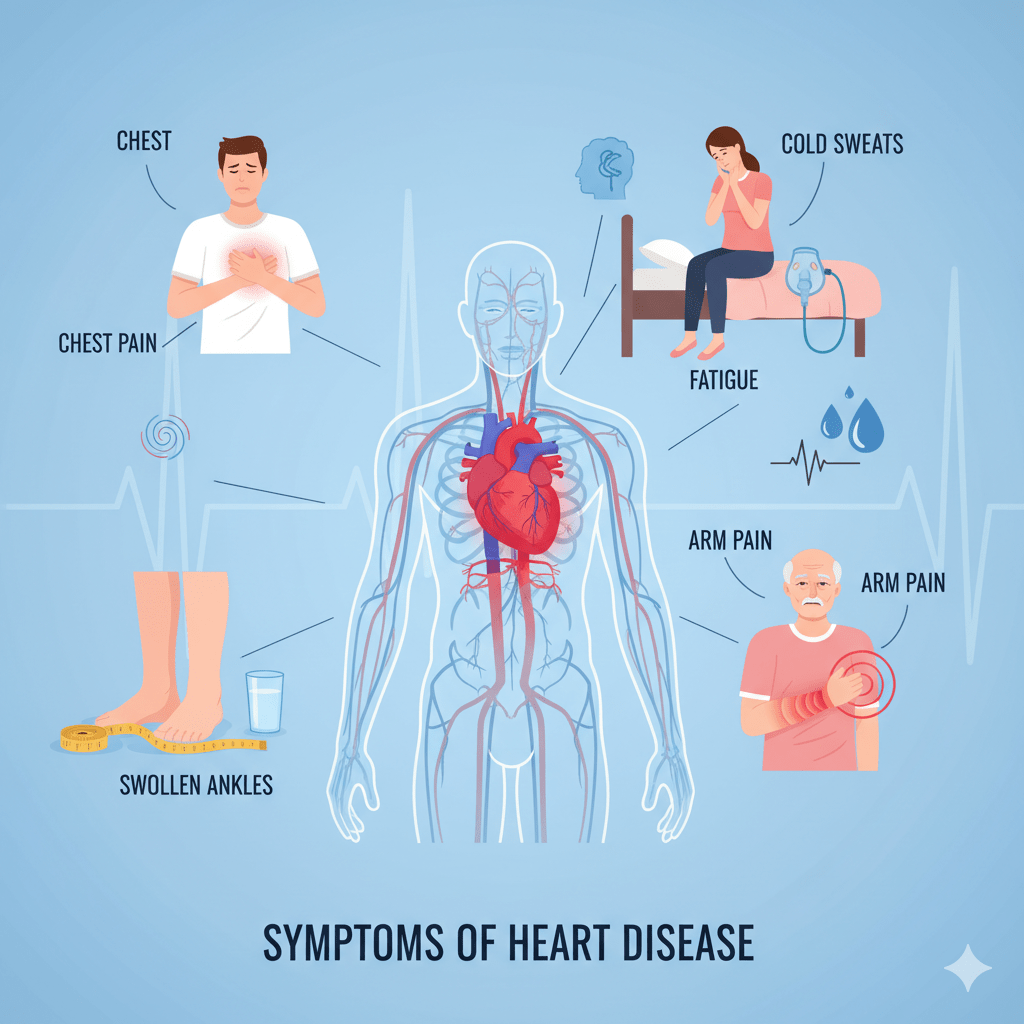
Symptoms of cardiac problems often include chest pain, shortness of breath, and irregular heartbeat. The sign and symptoms of heart disease may range from fatigue and swelling in the legs to dizziness and fainting.
1. Chest Pain or Discomfort
One of the most common symptoms of heart disease, chest pain (angina) often feels like pressure, squeezing, or heaviness in the chest.
2. Shortness of Breath
Difficulty breathing during rest or mild activity is an important symptom of a weak heart.
3. Unexplained Fatigue
Women often present with unusual tiredness as one of the first signs of heart problems, sometimes without chest discomfort.
4. Palpitations or Irregular Heartbeat
Rapid, pounding, or skipped beats may point to arrhythmias, a type of cardiac problem symptom.
5. Swelling in Legs, Ankles, or Feet
Fluid retention (edema) indicates the heart isn’t pumping effectively.
6. Dizziness or Fainting
Decreased flow of oxygen-rich blood to the brain leads to fainting, an early warning sign of heart problems.
7. Radiating Pain in the Neck, Jaw, or Back
Not all discomfort is in the chest; these silent symptoms of heart disease are often seen in women.
Women may experience subtler signs such as unusual fatigue, nausea, indigestion, shortness of breath, or discomfort in the back, jaw, or neck.
They are mistaken for digestive issues, stress, or age-related changes, and delay the diagnosis and treatment.
8. Nausea or Indigestion
Digestive upset may mask a heart issue, especially during a heart attack.
9. Excessive Sweating
Unexplained cold sweats are a sign of heart disease that requires immediate attention.
10. Reduced Exercise Tolerance
Finding daily activities more exhausting can signal declining heart function.
Symptoms of Different Types of Heart Disease
If you are wondering what are the symptoms of heart disease, look for warning signs such as chest discomfort, palpitations, and reduced exercise tolerance.
Different types of heart disease presents different signs and symptoms.
A buildup of plaque in arteries reduces blood flow, causing:
- Chest tightness or pressure.
- Shortness of breath.
- Pain in the neck, jaw, or arms.
- Sometimes CAD is only diagnosed after a major event like a heart attack or stroke.
Symptoms of irregular heartbeats include:
- Fluttering in the chest.
- Racing or slow heartbeat.
- Dizziness, fainting, or chest pain.
These may show up at birth with signs like:
- Blue or gray skin.
- Swelling around the eyes, belly, or legs.
- Poor feeding and weight gain in infants.
- In adults, congenital defects may cause fatigue, shortness of breath, or swelling.
Cardiomyopathy (Heart Muscle Disease)
Symptoms include:
- Fatigue and shortness of breath.
- Swelling in legs or ankles.
- Rapid or irregular heartbeat.
If a valve is narrowed (stenosis) or leaking (regurgitation), symptoms may include:
- Chest pain.
- Irregular heartbeat.
- Swelling in the lower body.
- Fainting spells.
Causes and Risk Factors of Heart Disease
Different conditions cause different types of heart disease. Some of the most common include:
- Atherosclerosis (plaque buildup in arteries).
- High blood pressure or high cholesterol.
- Diabetes.
- Genetic predisposition.
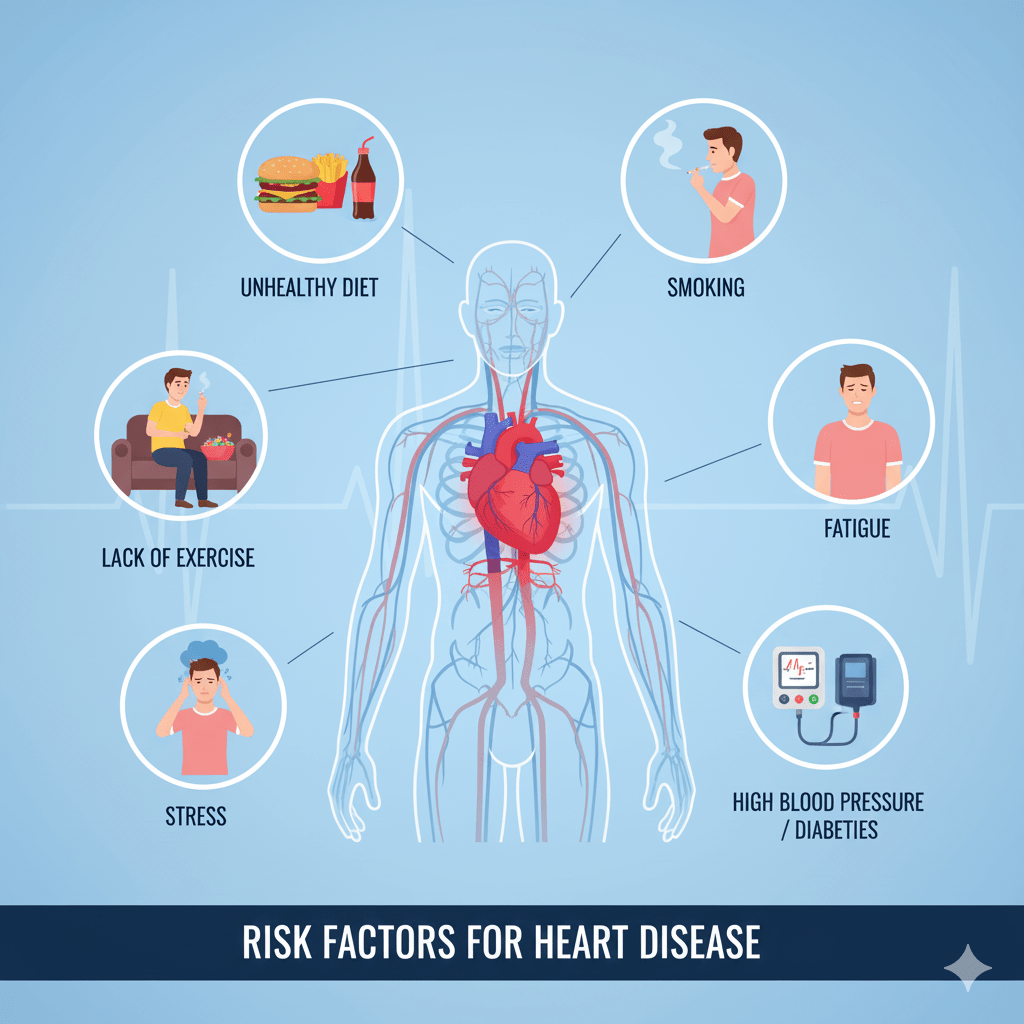
- Lifestyle factors like smoking, poor diet, and inactivity.
- Infections or autoimmune diseases.
- Aging.
Risk factors such as obesity, family history, and smoking significantly increase the likelihood of developing heart disease.
Complications of Heart Disease
Without timely intervention, heart disease can cause serious complications, like:
- Heart attack.
- Heart failure.
- Stroke.
- Abnormal heart rhythms.
- Cardiac arrest.
- Valve disease or pulmonary hypertension.
Diagnosis and Tests
If you are experiencing signs and symptoms of heart problems, your doctor may recommend:
- Electrocardiogram (ECG).
- Echocardiogram.
- +Cardiac CT or MRI scans.
- Stress tests.
- Cardiac catheterization.
- Blood tests, including lipid profile and other markers.
Management and Treatment
Treatment relies on the type and severity of the condition.
Management includes:
- Lifestyle changes: quitting smoking, regular exercise, and eating a heart-healthy diet.
- Medications: to control blood pressure, cholesterol, arrhythmias, or heart failure.
- Procedures or surgeries: stent placement, bypass surgery, valve repair, or ablation.
- Cardiac rehabilitation: supervised exercise and counseling for long-term heart health.
Prevention
While not all heart disease can be prevented, the risk can be reduced through:
- Maintaining a healthy weight.
- Controlling blood pressure, cholesterol, and diabetes.
- Exercising at least 30 minutes most days.
- Reducing stress.
- A balanced diet low in salt and saturated fat.
- Avoiding tobacco products.
Living With Heart Disease
Learning how to know if you have heart problems involves paying attention to subtle changes like unexplained tiredness or sudden breathlessness.
If you are diagnosed with cardiac issues, following medical advice closely is key. This includes:
- Taking prescribed medications consistently.
- Attending regular follow-ups.
- Regular diet and exercise.
- Seek immediate help if new or worsening heart problem symptoms occur.
Take Charge of Your Heart Health
Identifying the early signs of heart disease and seeking timely medical attention can prevent life-threatening complications.
Why Choose Dr. Muhamed Shaloob?
As a trusted cardiologist, Dr. Muhamed Shaloob provides expert evaluation and treatment for heart problem symptoms in Dubai. With vast experience in advanced diagnostics and personalized care, he helps patients protect and improve their heart health.
- Board-certified cardiologist in Dubai, known for precise diagnostics and compassionate care.
- Expertise in interventional cardiology, heart failure management, arrhythmias, and preventive cardiology.
- Special focus on complex angioplasties and high-risk interventions.
- Evidence-based approach combined with personalized treatment plans.
- Committed to patient education, helping individuals make informed choices about their heart health.
Detect the Early Signs of Cardiac Illnesses with Dr. Muhammed Shaloob
Common symptoms of weak heart include fluid retention, persistent cough, and difficulty performing everyday activities. From chest discomfort to silent fatigue, the early warning signs of heart disease should never be dismissed. If you are experiencing any symptoms, schedule a consultation with Dr. Shaloob for an accurate diagnosis and tailored treatment plan.
FAQs About Heart Problem Symptoms
What are the early warning signs of heart disease?
Chest pain, shortness of breath, fatigue, palpitations, and swelling in the legs are some of the earliest symptoms.
When should I see a doctor for heart disease symptoms?
If you notice persistent chest discomfort, breathing difficulties, fainting, or unexplained fatigue, seek medical care immediately.
Can symptoms of heart disease differ between men and women?
The symptoms of heart disease in men and women can differ, with men more likely to have chest pain and women more often experiencing fatigue, nausea, or back pain. Women often report fatigue, indigestion, or back pain, while men more commonly experience chest pain.
Are there heart disease symptoms that show up only during physical activity?
Yes. Angina or shortness of breath may appear during exertion and subside with rest, suggesting restricted blood flow.
What other conditions can mimic heart disease symptoms?
Anxiety, acid reflux, lung conditions, or musculoskeletal pain can sometimes resemble heart-related symptoms.
What tests are used to confirm if symptoms are due to heart disease?
Electrocardiograms (ECG), echocardiograms, stress tests, and cardiac CT scans are commonly used diagnostic tools.
Are symptoms of heart disease always sudden or can they develop slowly?
They can develop gradually, making it important to pay attention to subtle changes in your health.
Can lifestyle changes help reduce heart disease symptoms?
Yes. Quitting smoking, eating a balanced diet along with regular exercise, and stress management can lower risk and improve heart health.
Is family history important in heart disease risk?
Absolutely. A strong family history of cardiac issues increases your chances of developing heart disease.
Can symptoms of heart disease be silent or unrecognized?
Yes. Some individuals, particularly those with diabetes, may have silent symptoms of heart disease without obvious chest pain.