6 Signs of Heart Attack a Month Before – Early Symptoms, Warning Signs & Timeline

Medically Reviewed by
Dr. Muhamed Shaloob
(M.B.B.S, M.D. Internal Medicine, D.M. Cardiology)
DHA Licensed · MOH Licensed · Abu Dhabi DOH Licensed
A heart attack is often portrayed in movies as a sudden, dramatic event—a person clutching their chest and collapsing instantly. However, medical reality tells a far more nuanced story. For many, the body begins sending out SOS signals weeks in advance. Recognizing the 6 signs of heart attack a month before can be the difference between a life-saving medical intervention and a catastrophic cardiac event.
Understanding these early warning signs of a heart attack is crucial because the heart muscle begins to suffer from reduced oxygen (ischemia) long before the “big one” hits. Whether you are looking for pre heart attack symptoms female or signs of heart attack in men, knowing the heart attack timeline is your best defense.
In this comprehensive guide, we draw on the clinical expertise of Dr. Muhamed Shaloob, a leading cardiologist in Dubai with over 12 years of experience to identify the signs of an upcoming heart attack and explain what a heart attack feels like during its earliest, most treatable stages.
Does Your Body Warn You Before a Heart Attack?
Many patients ask, “does your body warn you before a heart attack?” The answer is a resounding yes. Research suggests that up to 50% of patients experience early symptoms of heart attack days or even a full month before a heart attack occurs.
These symptoms leading up to a heart attack are often called “prodromal symptoms.” They indicate that the coronary arteries are narrowing due to plaque buildup, and the heart is struggling to pump blood effectively. If you are wondering, “how long can you have symptoms before a heart attack?”, the answer can range from a few hours to several weeks.
The danger lies in the fact that early symptoms of heart attack are often “sub-clinical,” meaning they are mild enough to be dismissed as stress, aging, or a simple case of the flu. Understanding that heart attack symptoms for days can precede a total blockage is the first step in prevention.
The 6 Signs of Heart Attack a Month Before
While heart attack signs and symptoms vary between individuals, these six indicators are the most common warning signs before a heart attack reported by survivors in the weeks leading up to their diagnosis.
1. Unusual Fatigue and Sleepiness
One of the most common signs of pending heart attack, especially in women, is overwhelming exhaustion. This isn’t your typical “long day at work” tiredness. It is a profound fatigue before heart attack that makes simple tasks like making the bed or grocery shopping feel like running a marathon.
Why it happens: The heart is under stress and working harder to pump blood through narrowed vessels, leaving the rest of the body starved for oxygenated blood.
Timeline: This heart attack early warning sign often appears one month before a heart attack.
2. Shortness of Breath (Dyspnea)
If you find yourself gasping for air after minimal exertion, this is a major sign of heart problems. Shortness of breath heart attack signals often occur because the heart and lungs work in tandem; when the heart weakens and cannot pump blood forward, fluid can back up into the lungs, making breathing difficult.
How it feels: It may feel like you cannot get a deep breath or like you are suffocating slightly, even while sitting or lying down.
3. Indigestion, Nausea, and Bloating
Many people dismiss signs of imminent heart attack as simple gastric distress or “something I ate.” However, bloating heart attack signals and stomach pain before heart attack are very real indicators of cardiac distress.
Is gas a symptom of heart attack? It can be. The proximity of the heart to the digestive tract means the brain can confuse cardiac pain with stomach pain.
Female signs of heart attack: Women are statistically more likely than men to experience nausea heart attack symptoms or vomiting before heart attack as their primary warning.
4. Chest Discomfort or Tightness (Angina)
While not always the sharp pain people expect, chest pain heart attack warnings often manifest as a lingering pressure, “squeezing,” or “heaviness.”
Can heart attack symptoms come and go? Absolutely. Heart attack symptoms for days may involve pressure that appears during stress or exercise and disappears during rest. This is known as stable angina, a precursor to an imminent heart attack.
Is heart attack pain constant? Not usually in the early stages. The signs of pending heart attack often involve pain that “flickers” before becoming a permanent massive heart attack symptom.
5. Radiating Pain (Arm, Back, and Jaw)
Arm pain before heart attack is a classic warning sign of a heart attack in women and men. The pain often starts in the center of the chest and radiates outward to other parts of the upper body.
Back pain heart attack: Often felt as a deep ache between the shoulder blades.
Jaw pain heart attack: A deep, dull ache that feels like a toothache or earache but doesn’t respond to typical dental treatments.
6. Sleep Disturbances and Sudden Anxiety
Sleepiness heart attack signals aren’t the only sleep-related issues. Insomnia, difficulty staying asleep, or waking up feeling a sense of “impending doom” are significant signs of heart attack woman and male patients report.
Anxiety vs. heart attack: Many people struggle to distinguish between a heart attack vs. panic attack. A panic attack usually peaks and subsides within 20 minutes, whereas warning signs before heart attack tend to worsen or persist over hours and days.
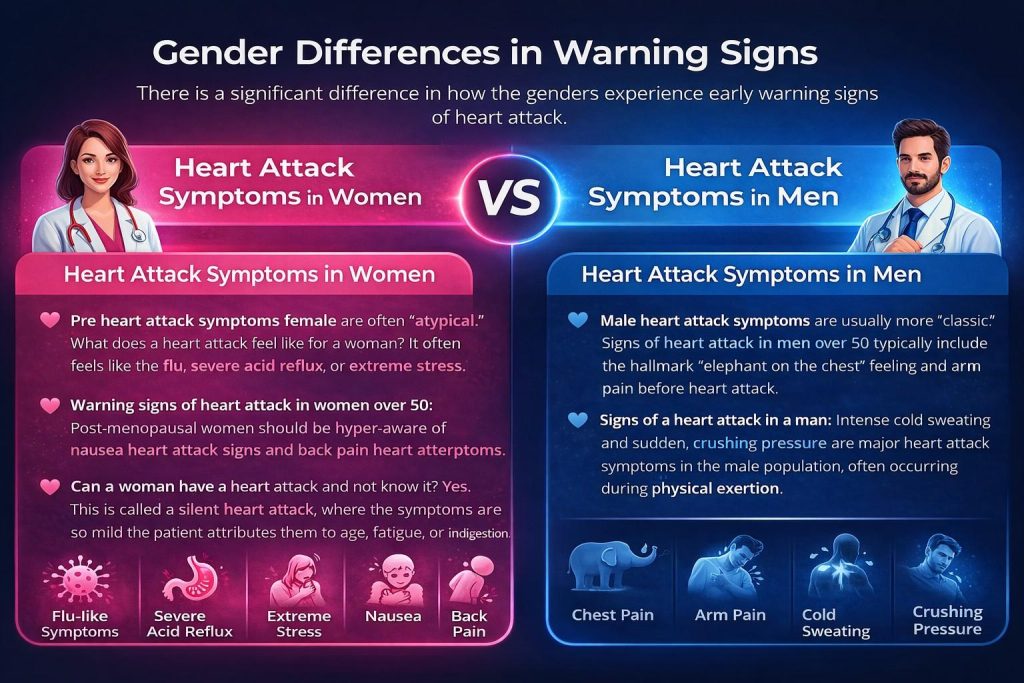
Gender Differences in Warning Signs
There is a significant difference in how the genders experience early warning signs of heart attack. For decades, medical research focused on men, leading many women to overlook their own pre heart attack symptoms female.
Heart Attack Symptoms in Women
Pre heart attack symptoms female are often “atypical.” What does a heart attack feel like for a woman? It often feels like the flu, severe acid reflux, or extreme stress.
Warning signs of heart attack in women over 50: Post-menopausal women should be hyper-aware of nausea heart attack signs and back pain heart attack symptoms.
Can a woman have a heart attack and not know it? Yes. This is called a silent heart attack, where the symptoms are so mild the patient attributes them to age, fatigue, or indigestion.
Heart Attack Symptoms in Men
Male heart attack symptoms are usually more “classic.” Signs of heart attack in men over 50 typically include the hallmark “elephant on the chest” feeling and arm pain before heart attack.
- Signs of a heart attack in a man: Intense cold sweating and sudden, crushing pressure are major heart attack symptoms in the male population, often occurring during physical exertion.
Timeline of a Cardiac Event: Early, Mini, and Silent
Understanding the heart attack timeline helps in identifying a minor heart attack symptoms before it escalates into a life-threatening emergency.
Mini Heart Attack Symptoms
A mini heart attack, often referred to as Unstable Angina, is a final warning shot. What does a mini heart attack feel like? It feels exactly like a major heart attack, but the blockage is temporary. Symptoms of mini heart attack can last for just a few minutes, but they indicate a very high risk of an imminent heart attack within the next 24 to 48 hours.
Silent Heart Attack Symptoms
Silent heart attack symptoms are arguably the most dangerous because they go ignored, leading to permanent scarring of the heart muscle. I think i had a heart attack but feel fine is a common sentiment among those who discover they had a myocardial infarction only during a routine ECG. If you experience headache chest pain fatigue nausea all at once, your body was likely signaling early heart attack symptoms.
How to Tell if You’re Having a Heart Attack: Red Flags
How do you know if you have a heart attack? You must look for these “Red Flag” warning signs of heart attack:
Sweating heart attack: Breaking out in a cold, clammy sweat for no apparent reason, especially in a cool environment.
Dizziness heart attack: Feeling lightheaded, “woozy,” or as if you might faint.
Heart attack or anxiety woman: If the “anxiety” is accompanied by radiating jaw pain and a cold sweat, it is a cardiac emergency.
How do you know if you had a heart attack? If you experienced a cluster of symptoms leading up to a heart attack and now feel a lingering, profound weakness, an irregular heartbeat, or a “fluttering” in your chest, you should consult a cardiologist like Dr. Muhamed Shaloob immediately for diagnostic testing.
Conditions That Mimic Heart Attack
It is vital for patients to understand the difference between heart attack and stroke, as well as other conditions.
Heartburn/Gas: This pain is usually localized in the center of the chest and often responds to antacids. It typically doesn’t radiate to the arms or jaw.
Anxiety/Panic Attack: While a panic attack can cause chest tightness, it is usually accompanied by hyperventilation and a clear psychological trigger.
Muscle Strain: If you can pinpoint the pain to a specific spot that hurts more when you press on it or move your torso, it is likely musculoskeletal. Heart attack signs are internal and do not change with external pressure.
Diagnostic Tools and Preventative Care
If you recognize any of the 6 signs of heart attack a month before, your cardiologist will use several tools to evaluate your risk.
ECG/EKG: To look for electrical abnormalities or signs of a past silent heart attack.
Blood Tests (Troponin): To see if the heart muscle has released specific enzymes indicating a small heart attack symptoms event.
Stress Test: To see how your heart handles increased demand and if angina appears under stress.
Echocardiogram: An ultrasound that shows the structural health and pumping power of your heart.
About the author

Dr. Muhamed Shaloob
Consultant Interventional Cardiologist
Advanced Cardiac Care Specialist
Preventive & Interventional Cardiology
15+ Years Experience
Heart Failure & Hypertension Management
Expert in ECG, Echo & Cardiac Screening
Dr. Muhamed Shaloob is a specialist cardiologist in Dubai with extensive experience in diagnosing and treating a wide range of heart conditions. He specializes in preventive cardiology, hypertension management, chest pain evaluation, heart failure care, and minimally invasive cardiac procedures.
He is committed to evidence-based cardiac care and focuses on early diagnosis, lifestyle-based prevention, and personalized treatment plans to help patients achieve long-term heart health.
Frequently Asked Questions (FAQ)
Can heart attack symptoms last for days?
Yes. Can heart attack symptoms last for days is one of the most common queries. Symptoms can come and go for several days, weeks, or even months leading up to the actual blockage.
What are the signs of heart attack in elderly woman?
Elderly women often experience sleepiness, heart attack signs, sudden confusion, or a drastic inability to perform daily tasks like walking to the mailbox due to extreme fatigue.
How long does a heart attack last?
How long does a heart attack last depends on the severity of the blockage. The actual damage can take place over several hours, but the signs of heart attack can begin weeks prior.
Why do heart attacks happen?
Heart attack usually boils down to coronary artery disease—the buildup of plaque that eventually ruptures and forms a clot, cutting off the blood supply.
Can you have heart attack symptoms and not know it?
Absolutely. Many people have a silent heart attack and only realize it years later when an ECG shows old scar tissue on the heart.
How do I know if I'm having a heart attack right now?
If you feel a heavy pressure in your chest, are sweating profusely, and have pain in your arm or jaw, you must call emergency services. How to know if you’re having a heart attack is to recognize that these symptoms do not go away with rest.
What does a mild heart attack feel like or What does a mild heart attack feel like?
It often feels like a “bad case of indigestion” or a pulled muscle in the chest that lingers for hours.
Is heart attack pain constant?
No, is heart attack pain constant is a common myth. The pain can wax and wane, which often tricks patients into thinking they are getting better when they are actually in the middle of a heart attack timeline.
What is a "mini" heart attack?
A mini heart attack symptoms event usually refers to Non-ST elevation myocardial infarction (NSTEMI) or unstable angina, where the heart is damaged but the artery is not 100% blocked yet.
Conclusion: Take Action Today
The signs your body is telling you something is wrong should never be ignored. Whether it is unusual fatigue, persistent indigestion, or radiating jaw pain, these early warning signs of heart attack are your heart’s desperate way of asking for intervention.
If you are in Dubai and concerned about signs of early heart disease or think you have experienced symptoms before a heart attack, trust your care to Dr. Muhamed Shaloob. As a leading heart specialist, he provides precise diagnostics and compassionate care to help you navigate your heart health.
Don’t wait for the “big one.” Recognize the 6 signs of heart attack a month before and protect your future.
Medical Disclaimer
This article is for informational purposes only and is not a substitute for professional medical advice, diagnosis, or treatment. Always seek the advice of a qualified health provider with any questions you may have regarding a medical condition.
Medically reviewed by Dr. Muhamed Shaloob